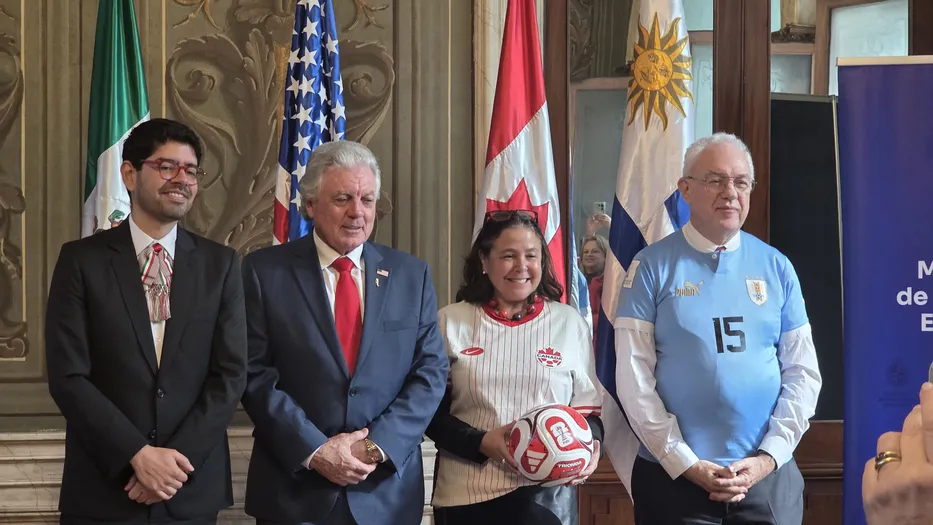


In the world of Uruguayan politics, sometimes one click is enough to unleash a perfect storm. That was what happened to Luis Alberto Heber (in the context of the repercussions generated by Lubetkin), who decided to join the wave of World Cup support by wearing the Uruguayan national team shirt. What was intended to be a gesture of closeness and patriotism ended up becoming a moving target for users, who took advantage of the opportunity to pass accumulated bills.
The image, which quickly circulated on X (former Twitter) and Facebook, showed a smiling Lubetkin, posing in the colors of the Celeste. However, within a few minutes, the comments section began to fill with criticism. It was not about the shirt itself, but rather what the use of national symbols represents by figures who, for many, have a questionable management. “They don't make one,” read one of the messages with the most interactions, summarizing the feeling of a sector of the population that no longer distinguishes between a sports post and a management claim.
The social thermometer: when politics gets into the stadium
The episode reflects a phenomenon that has been recurring: growing citizen impatience. There is no longer any room for “light” gestures. When a leader of Yamandú Orsi's cabinet decides to wear the national shirt, the voter—especially the one on the opposite sidewalk—receives it as a provocation or, at best, as a crude attempt to whitewash the image.
Meanwhile, in the hallways of the Executive Tower, the communications team is surely analyzing the impact. It is not the first time that a leader tries to connect emotionally and ends up hitting the wall of disapproval. The problem is not the shirt, but the context: a government under the magnifying glass where every movement, even one as simple as a photo, is analyzed as if it were a chess piece.
The cost of “not holing one”
The comment “they don't hole one” that was repeated in several discussion threads is not a simple insult in passing; It is a symptom. It is the manifestation of a climate of discontent that permeates beyond economic measures or official announcements. When fatigue is high, even the most harmless gesture—such as celebrating the team—is interpreted through the filter of political cynicism.
At the end of the day, this episode leaves us with a lesson about politics 2.0: national symbols no longer have an automatic unifying effect when the terrain is mined. For communication strategists, the challenge is enormous: how to be human and approachable in a climate where people are not willing to give even a single applause? Lubetkin learned a quick and painful lesson. In networks, the shirt sometimes weighs more than it seems.
Subscribe to Uruguay Al Día
Receive the most important news directly in your email. Clear, independent and updated information every day.
Follow us on WhatsApp
Join our official channel and receive alerts, news and exclusive content from Uruguay Al Día.
🔔 Join the WhatsApp channel