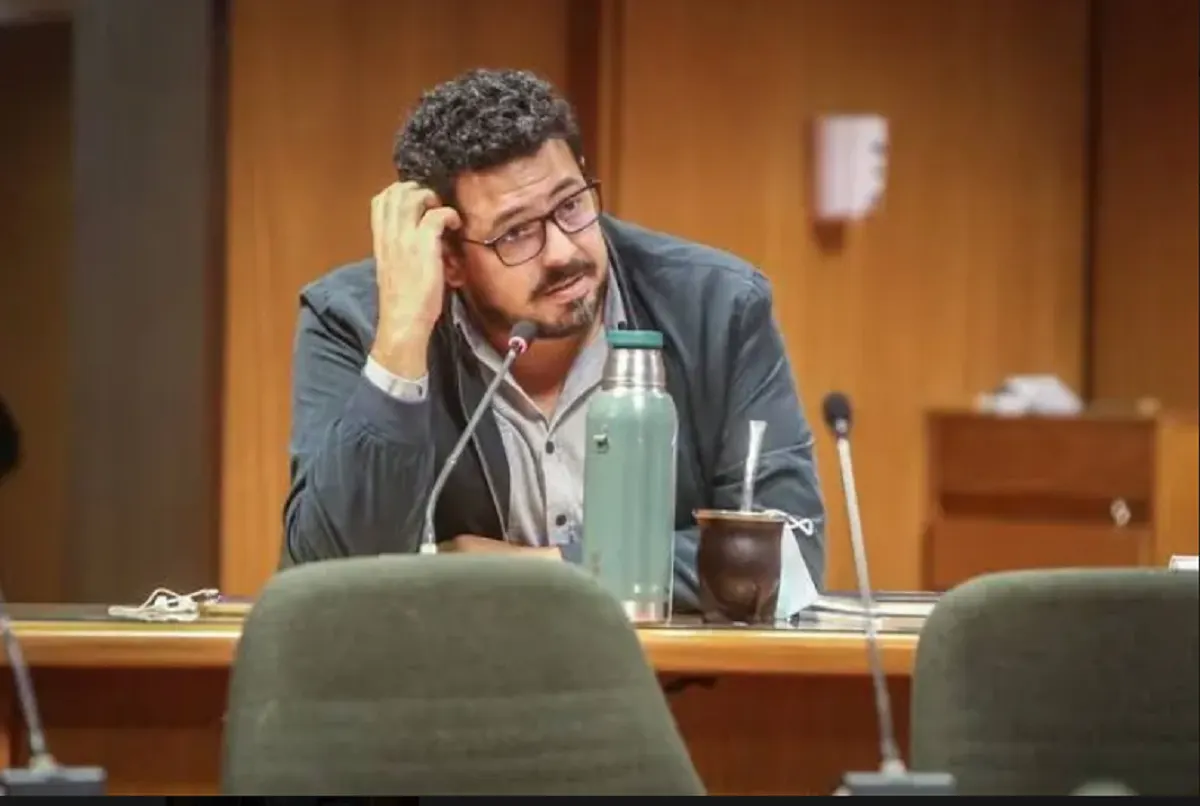


The political atmosphere in Florida was not one of a day of rest. With the weight of the numbers on the table and the opposition's criticism resonating on the public board, the Secretary of the Presidency, Alejandro Sánchez, decided to go on the offensive. There were no detours: in front of the microphones, the leader defended the roadmap that the Executive Branch and the Ministry of the Interior have been drawing up to try to control one of the deepest concerns of citizens: public safety.
"We made a proposal in the electoral campaign for a government that lasts five years; not everything is done in one year," Sánchez launched, marking a clear dividing line. For the secretary, part of the current political dialectic has become an exercise in automatic criticism, a position that, in his opinion, is far from being a constructive contribution for the country.
The numbers behind the defense
The administration's central argument rests on the records. According to the secretary, the trend shows that the crime rate, although it remains a heavy structural problem for Uruguayan society, has begun to decline. “Uruguay has managed to reduce crimes in 2025 and so far in 2026 they are also decreasing,” he stated with determination.
However, Sánchez avoided falling into triumphalism. The crime rate continues to impact the tranquility in the neighborhoods and he is aware that the percentages do not always translate into the perception of security that the average resident experiences. “Is it enough? No, because the crime rate in Uruguay is very high,” he admitted. That phrase, stripped of technicalities, was his way of saying that, although the direction is correct, the hard work is barely in its maturation phase.
Changes in the leadership and the message to crime
Regarding the recent movements in the police leadership made by the Ministry of the Interior, Sánchez was emphatic: it is not a simple change of names. The objective, he explained, is to “strengthen the work in the persecution of criminals, in the prevention of crimes and in generating a safer city and country.” It is, in essence, an attempt to oil the wheels of a force that, for years, has lived under the magnifying glass of public opinion that demands immediate results.
The opposition, which has maintained a constant critical tone, seems not to find a meeting point with the Executive. For Sánchez, there is a latent frustration at the lack of recognition for progress. The underlying request is a call for political maturity: that criticism be about what fails, but that there be the intellectual honesty to recognize the positive steps.
The final bet
The immediate future of management, according to the secretary, lies in deepening. The focus will not move from the fight against organized crime and prevention in the streets. The warning to criminals, pronounced almost like a road map, was direct: if they cross the line, they will be pursued.
While the figures will continue to be monitored month by month at the Violence and Crime Observatory, the Government seems determined to maintain the position that results require time and persistence. In a scenario where the security board is played on every corner and in every police report, Sánchez is betting that, at the end of the road, the citizens' thermometer ends up validating the effort for a safer life.
Subscribe to Uruguay Al Día
Receive the most important news directly in your email. Clear, independent and updated information every day.
Follow us on WhatsApp
Join our official channel and receive alerts, news and exclusive content from Uruguay Al Día.
🔔 Join the WhatsApp channel