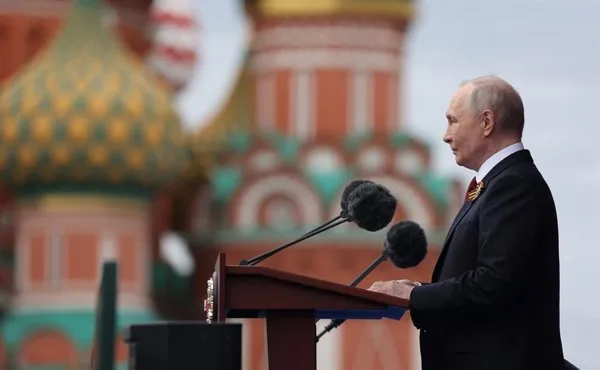

The United Kingdom Ministry of Defense issued a report this Tuesday analyzing the recent Victory Day military parade in Moscow, held on May 9. According to the British authorities, the “discretion” of the event and the lack of international representation are indicative of the “weakness” of the Russian president, Vladimir Putin, and of a leadership that appears to be aging.
In the analysis, it stands out that the parade was noticeably more sober compared to previous editions. Unlike past years, this time no armored vehicles or missile systems were on display, which, according to London, reflects the “current operational situation” in the context of the war in Ukraine. The threat of Ukrainian drones and the lack of available military equipment, due to the demands of the conflict, would have influenced this decision.
The British report argues that the low-key tone of the parade could project an image of weakness in the Russian leadership, which faces a significant challenge in countering the drone threat. This perception adds to a broader context of international isolation, where representation at the event was notably reduced.
In this edition of the parade, only five political leaders from recognized countries attended, which contrasts sharply with the participation of more than 50 heads of state in 2005 and around 30 in 2015. The absence of “a great power” at the event highlights Russia's growing isolation in the international arena.
Additionally, the report mentions “major mobile internet disruptions” in Moscow, measures that were implemented as part of the anti-drone strategy. These outages not only affected communication, but also had a negative impact on the city's economic activity, adding another layer of complexity to the current situation.
As for Putin's speech during the parade, British officials describe it as a review of "the usual lines," in which the Russian president frames the war in Ukraine as a conflict against NATO, promising eventual victory in a contest that has already been ongoing for five years.
The Victory Day parade, which commemorates the Soviet triumph over Nazi Germany in World War II, has traditionally been a major event in Russia. However, this year, the atmosphere was marked by sobriety and a lack of ostentation, which has generated a buzz in public opinion about the current state of the country and its leadership.
The situation in Ukraine remains a hot topic internationally, and this year's parade becomes a reflection of the tensions facing Russia and its relationship with the rest of the world. The war, which began in 2014, has transformed not only the political landscape but also the perception of Russia's military and diplomatic capabilities.
In the local context, the population observes events closely. Many citizens wonder how the current situation will affect daily life and the country's economy. Internet interruptions and restrictions imposed by the government generate concern among ordinary people, who feel the impact of these decisions on their daily lives.
The lack of international leaders at the parade has also been a topic of conversation in Moscow's cafes and squares. The perception that Russia is increasingly isolated resonates in discussions about the country's future and its role on the global stage. The image of Putin surrounded by a shrinking circle of allies raises questions about the direction the country will take in the coming years.
The war in Ukraine, which has left thousands dead and had a devastating impact on the region, remains a flashpoint in Russian politics. The Kremlin's narrative, which presents the conflict as a fight against external forces, faces the reality of a country that increasingly finds itself at the center of international attention.
The current situation in Russia, marked by a staid parade and limited international representation, reflects a moment of uncertainty in Putin's leadership. The lack of resources and the pressure of war in Ukraine are factors that continue to shape the country's domestic and foreign policy.
The Victory Day parade, which traditionally symbolizes national strength and pride, has become an event that highlights the weaknesses of the current regime. The image of an aging and isolated leadership is a theme that resonates in public debate, as the war in Ukraine continues.
The situation on the front lines and the repercussions on the daily lives of citizens are part of a context that is becoming increasingly complex. The war, which seems to have no end in sight, continues to shape the course of Russia and its relationship with the rest of the world.
The war in Ukraine has already been going on for five years.
Subscribe to Uruguay Al Día
Receive the most important news directly in your email. Clear, independent and updated information every day.
Follow us on WhatsApp
Join our official channel and receive alerts, news and exclusive content from Uruguay Al Día.
🔔 Join the WhatsApp channel