Sea level rise threatens infrastructure in vulnerable regions of the Global South
A recent study by Canada's McGill University warns that more than 100 million buildings in countries in the Global South could be at risk of periodic flooding due to rising sea levels if urgent action is not taken to reduce greenhouse gas emissions. This large-scale analysis, which assesses building-by-building vulnerability in coastal areas of Africa, Southeast Asia, Central and South America, raises alarm about the potential consequences of climate change in the coming decades and centuries.
A detailed assessment of the long-term impact on coastal infrastructure
The study, published in the journal npj Urban Sustainability, relied on high-resolution satellite maps and elevation data to determine how many buildings could be affected under different sea level rise scenarios. The researchers analyzed increments ranging from 0.5 meters to 20 meters, considering different possible trajectories depending on how quickly fossil fuel emissions are reduced or increased.
As explained by Professor Natalya Gomez, co-author of the work and holder of the Canada Research Chair in Interactions between the Ice Sheet and Sea Level at McGill University, “sea level rise is a slow but unstoppable consequence of global warming that is already affecting coastal communities and will continue for centuries.” Gomez added that, although there is generally talk of increases of tens of centimeters or a meter, the reality is that if emissions are not stopped, the rise could extend to several meters in the near future.
Risk scenarios: from 0.5 to 20 meters of sea level rise
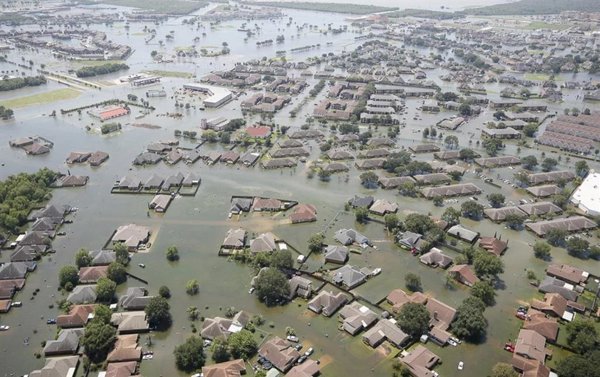
The study's analysis reveals that a modest increase of 0.5 meters – a figure considered possible even with the most ambitious emissions reduction targets – would already put approximately three million buildings in the study areas at risk. However, if sea level were to rise five meters or more, the amount of infrastructure at risk would skyrocket, exceeding 100 million buildings affected in vulnerable regions.
This level of ocean water increase, which could occur within a few centuries if emissions do not decrease rapidly, would affect entire neighborhoods, critical infrastructure and cultural sites of heritage value. The magnitude of the risk is such that many of these constructions are located in areas of low altitude and high population density, which increases the social and economic vulnerability of the affected communities.
Areas of greatest exposure and challenges for coastal countries
Professor Jeff Cardile, also a co-author of the study and a professor at McGill University, commented that “we were surprised by the large number of buildings at risk from relatively moderate long-term sea level rise.” In addition, he highlighted that exposure varies considerably between countries and regions, depending on coastal topography, population density and distribution of buildings.
Some nations in the Global South face greater challenges than others, mainly due to their geographic vulnerability and lack of adequate infrastructure. The presence of ports, refineries, cultural heritage sites and other assets in risk areas increases the complexity of adaptation and protection tasks.
Tools for climate planning and adaptation
The researchers emphasize that these findings provide crucial information for urban planners, policymakers and communities who must prepare for an inevitable sea level rise scenario. To facilitate decision-making, the study includes an interactive map accessible through Google Earth Engine, which allows you to visualize the areas with the highest risk in different regions of the Global South.
This map is a valuable tool for designing adaptation strategies, which may include the construction of protective infrastructure, the modification of land use plans or, in some cases, the implementation of controlled withdrawals from communities in high-risk areas.
The need for immediate actions to avoid a catastrophic scenario
The study warns that, to prevent the flooding of buildings from reaching catastrophic figures, it is essential to quickly reduce greenhouse gas emissions. Inaction could translate into a crisis of forced displacement, loss of assets and irreparable economic damage for decades to come.
The international community faces the challenge of implementing policies that allow for effective and sustained adaptation, as well as accelerating efforts to limit sea level rise in the coming decades. Science indicates that, if we do not act quickly, the most pessimistic projections could come true, affecting millions of people and putting the infrastructure of many vulnerable nations in the Global South in check.
In conclusion, the McGill report highlights the urgency of taking coordinated and definitive measures to confront the risk of a rise in sea level that, if left to advance uncontrolled, can radically transform the world's coasts and compromise the lives of millions of inhabitants in already vulnerable regions.
Leave your comment
To comment you must be registered and logged in.
Comments (0)
There are no comments yet.