An almost forgotten yogurt recipe, common in the Balkans and Türkiye, using ants, has been recreated in Danish research published in the journal iSCience.
The study shows that bacteria, acids and enzymes present in ants can drive the fermentation process that turns milk into yogurt. The work highlights how traditional practices can inspire new approaches in food science and even bring creativity to the table.
"Today's yogurts are typically made with only two bacterial strains," says lead author Leonie Jahn of the Technical University of Denmark. «If we look at traditional yogurt, we see that its biodiversity is much greater, varying according to location, homes and the season of the year. This provides more flavors, textures and personality.
Red wood ants (Formica species) can be found crawling around the forests of the Balkans and Türkiye, where this yogurt-making technique was popular in the past. To better understand how to use these ants to make yogurt, the researchers visited co-author and anthropologist Sevgi Mutlu Sirakova's family village in Bulgaria, where her relatives and other locals remember the tradition.
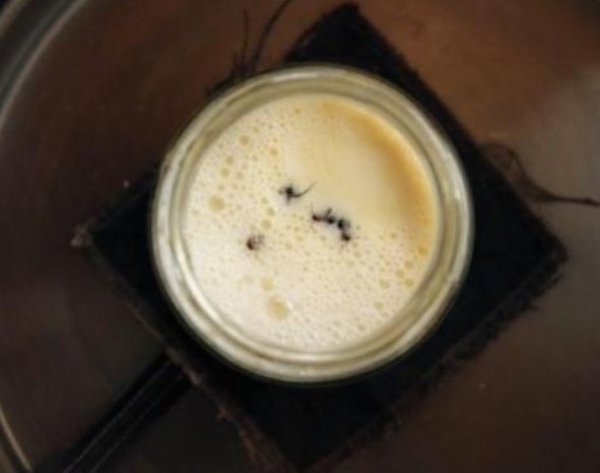
"On instructions from Sevgi's uncle and members of the community, we put four whole ants in a jar of warm milk," recalls lead author Veronica Sinotte of the University of Copenhagen, Denmark. The jar was then placed in an anthill to ferment overnight. The next day, the milk had begun to thicken and sour. "That's an early stage of yogurt, and it tasted like that too."
The researchers, who tested the yogurt, described it as slightly sour, grassy and with grass-fed fat flavors.
Back in Denmark, the team looked at the science behind ant yogurt. They discovered that ants carry lactic and acetic bacteria. The acids produced by these bacteria help coagulate the dairy product. One type of these bacteria was similar to that found in commercial sourdough.
The insects themselves also contribute to the yogurt-making process. Formic acid, which is part of the ants' natural chemical defense system, acidifies milk, affects its texture and likely creates an environment conducive to the development of acidophilic microbes in yogurt, according to the researchers. The enzymes from the ant and the microbes work together to break down the proteins in the milk and turn it into yogurt.
The researchers compared yogurts made with live, frozen and dehydrated ants. Only live ants generated the right microbial community, meaning they are best suited for making yogurt. However, the team concluded that caution was necessary to ensure the safe consumption of ant products: live ants can harbor parasites, and freezing or dehydrating ants can sometimes allow harmful bacteria to proliferate.
To test the contemporary culinary possibilities of ant yogurt, the team partnered with the chefs at Alchemist, a two-Michelin-starred restaurant in Copenhagen, Denmark, who put a modern twist on traditional yogurt. They served diners various creations, including ant-shaped yogurt ice cream sandwiches, spicy mascarpone-type cheeses, and clarified milk cocktails, all inspired by ant yogurt and using the insect as a key ingredient.
Leave your comment
To comment you must be registered and logged in.
Comments (0)
There are no comments yet.