

Taiwan's position on tensions with China
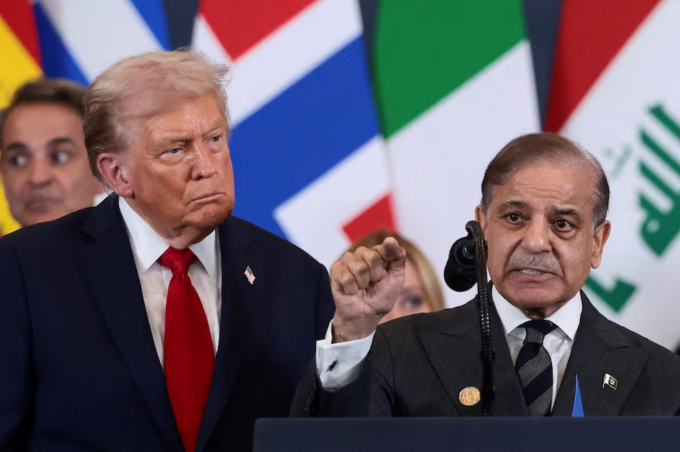
The Government of Taiwan reaffirmed this Saturday its conviction that the United States' position on the status of the island, amid China's historic sovereignty claims, "has not changed" following the recent summit in Beijing between US President Donald Trump and his Chinese counterpart, Xi Jinping.
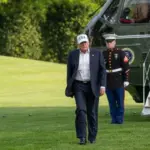
Upon his return from China, Trump confirmed that Taiwan was a central topic in their talks. Although the United States has maintained a public stance of support for China's national unification policy, in practice it has been inclined to preserve the status quo. This status quo allows Taiwan to defend its independence, while Washington maintains an arms purchase agreement with the island, without officially recognizing its independence.
Trump stressed that “he did not reach any commitment” in relation to Taiwan and anticipated that he will make a decision “soon.” He said he does not see an immediate risk of conflict around the island, stating: “I think we will be fine.” However, the president avoided commenting on whether the United States would intervene in the event of a conflict.
For its part, the Taiwanese Presidency reiterated that “the Republic of China”, the official name of the Taiwanese authorities, is a “sovereign and independent democratic country.” Presidential spokesperson Karen Kuo thanked Trump for his continued support for security in the Taiwan Strait since his first term.
Kuo also stressed that arms sales between Taiwan and the United States reflect Washington's security commitment to the island, as established by the Taiwan Relations Act. This agreement not only seeks to ensure the security of Taiwan, but also acts as a deterrent against regional threats.
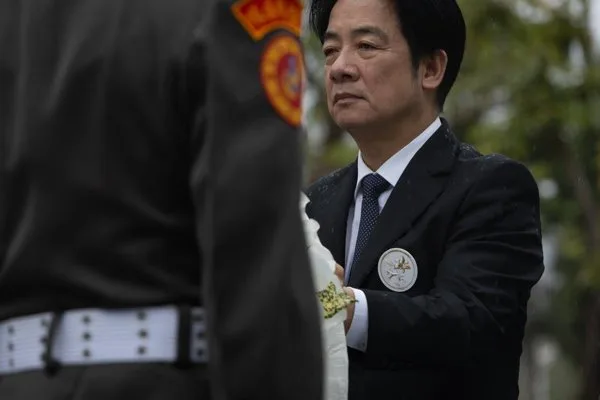
Taiwanese President Lai Ching Te said that Taiwan hopes to continue collaborating with the United States and other democratic allies to address the risks that authoritarian states pose to geopolitical security and global stability.
The implications of the relationship between Taiwan and the United States
The relationship between Taiwan and the United States has been a sensitive issue in the context of tensions with China. While Washington has maintained a policy of strategic ambiguity, Taiwan seeks to strengthen its ties with the North American country to ensure its defense.
In this sense, the Law on Relations with Taiwan, enacted in 1979, establishes the framework for military cooperation and the sale of weapons to the island. This agreement has been essential for Taiwan to maintain its defense capacity in the face of growing pressure from Beijing.
Trump's statements and Taiwan's response reflect the complexity of the situation. While the US president tries to balance relations with China, Taiwan clings to its independence and seeks international support. The situation is further complicated by the growing militarization of the region and China's maneuvers in the Taiwan Strait.
Spokesperson Kuo emphasized that Taiwan is committed to working with the United States and other democratic allies to address the challenges presented by authoritarian regimes. This approach seeks not only to strengthen Taiwan's security, but also to contribute to a more stable world order.
In the midst of this panorama, the international community is closely observing the movements of both countries. The tension in the Taiwan Strait is a recurring issue on the security agendas of many countries, which see the situation as a possible point of conflict in the future.
Taiwan's stance, backed by the United States, is presented as a challenge to China's aspirations to consolidate its influence in the region. The dynamics between these actors will continue to be a central issue in international politics, with implications that could affect stability in Asia and beyond.
Taiwan, in its quest for recognition and support, continues to reaffirm its identity as a democratic and sovereign country, while the international community remains attentive to developments in the region.
Subscribe to Uruguay Al Día
Receive the most important news directly in your email. Clear, independent and updated information every day.
Follow us on WhatsApp
Join our official channel and receive alerts, news and exclusive content from Uruguay Al Día.
🔔 Join the WhatsApp channel