
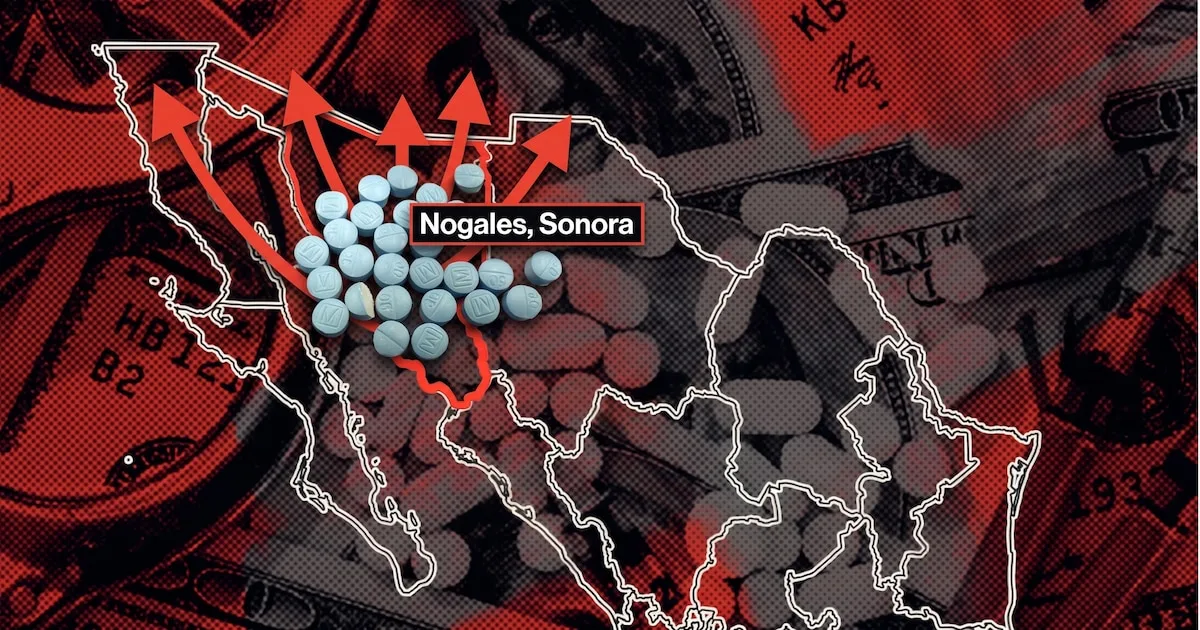


Nogales, in northern Mexico, has established itself as a strategic point in the dynamics of drug trafficking on the border with the United States, where the activities of organized crime coexist with the daily routine of its inhabitants.
In recent days, the arrest of Isaí “N”, alias The Chinacate, put the focus back on the municipality. The authorities point him out as an alleged operator linked to Los Chapitos, one of the factions of the Sinaloa Cartel, with alleged participation in the trafficking of synthetic drugs to the United States.
Recent arrests and pressure on the border
The case of “El Chinacate” is not isolated. In various recent operations, people linked to criminal structures that operate in the region were also arrested, which reinforces the attention on Nogales as an active corridor for drug and weapons trafficking.
Among those detained are Jesús “N” and Claudia “N”, allegedly linked to the Los Salazar group, as well as Alejandra Estefanía “N”, a US citizen wanted by Interpol for crimes related to drug trafficking and weapons.
Federal and state authorities have intensified controls in the border area, with operations that include vehicle inspections, patrols and drug seizures, especially fentanyl, one of the most trafficked substances into the United States.
A disputed territory on the border
Reports from organizations such as InSight Crime indicate that Nogales functions as a territory of dispute between different criminal structures. In sectors of the city, groups such as Los Salazar maintain a presence, while other areas are attributed to cells linked to the Sinaloa Cartel.
This territorial division is reflected in the security dynamics, with frequent episodes of arrests, seizures and operations that impact both economic activity and daily life.
In 2023, for example, authorities reported the discovery of a shipment of hundreds of thousands of fentanyl pills in the border region, one of the most important seizures in recent years.
Tunnels and clandestine routes on the border
The area has also been the scene of the discovery of tunnels used for the illegal trafficking of people and goods between Mexico and the United States. These underground structures demonstrate the logistical complexity of organized crime in the region and the constant pressure on border control.
One of these tunnels was recently located in the Nogales area, reinforcing the perception of a highly guarded border, but also constantly challenged by criminal networks.
Impact on everyday life
Beyond the operations, the presence of organized crime has visible effects on daily life. In some sectors of the city, residents live with checkpoints, patrols and frequent controls.
In businesses and public spaces, the topic appears recurrently in everyday conversations, especially after each high-profile operation or arrest.
Local economic activity is also affected by the perception of insecurity and the reduction in tourist flow in certain seasons.
A border in constant tension
Nogales continues to be a key point on the drug trafficking route to the United States, especially in the trafficking of synthetic drugs such as fentanyl.
While the authorities reinforce operations and controls, the city continues trapped in a complex dynamic where the local economy, migration, border surveillance and criminal structures coexist.
In this unstable balance, each arrest or seizure puts Nogales back in the center of the map of organized crime in the border region.
Subscribe to Uruguay Al Día
Receive the most important news directly in your email. Clear, independent and updated information every day.
Follow us on WhatsApp
Join our official channel and receive alerts, news and exclusive content from Uruguay Al Día.
🔔 Join the WhatsApp channel