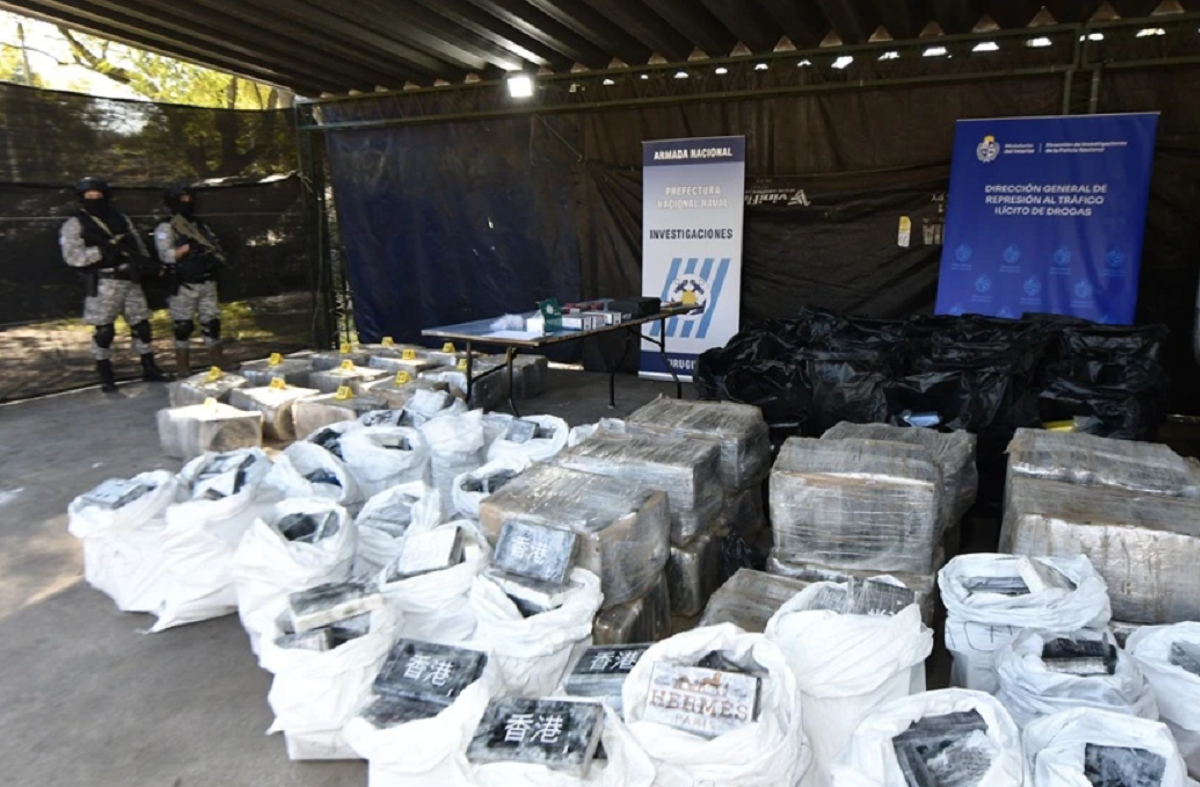

At the door of a warehouse, the scene is almost surreal. Between boxes with thousands of mobile phones seized in operations against micro-trafficking and high-end cars that once appeared on the streets as symbols of drug power, there is a change of era in criminal prosecution. The Uruguayan State has gone from passivity to a more aggressive strategy: emptying the pockets of those who operate outside the law.
According to data obtained by El País in a request for access to information, the magnitude is considerable. In the last two and a half years alone, the National Drug Board's (JND) Seized Asset Fund has taken control of thousands of assets, from simple household appliances to aircraft, with a value measured in millions of dollars. It is no longer just about seizing to save; It is about managing to return to society a part of what crime tried to take from it.
From the mansion to the auction
The engineering behind this process is complex. It is not just a matter of grabbing a good and putting it up for sale. It involves close coordination between judges, prosecutors and the JND to prevent assets from “disappearing” before the Court issues the confiscation. The memory of past mistakes—like that Citadel building that vanished while the authorities watched—has served as a lesson. Today, the order is clear: immediate precautionary measures.
The market moves fast. Recently, an apartment in Pocitos was auctioned off with such success that about 70 people came to visit it, attracted by the possibility of acquiring an asset of illicit origin in a legal bid. In the next three months, the auction agenda includes properties on the Gold Coast, Montevideo and Punta del Este. The objective is clear: go to the heart of the criminal financial structure.
A change in the burden of proof
Why are we seeing more seizures now than a decade ago? The answer lies in legislative evolution. With the anti-money laundering law of 2017, the rules of the game changed drastically. “Now he who loses, knows he loses,” comments a criminal lawyer. The burden of proof was reversed: it is no longer only the State that must prove the illicit origin, but the accused must prove the legality of his assets.
This new tool, called “extended confiscation”, even allows us to go after assets that are in the name of relatives or close friends, breaking that network of front men that previously protected the big bosses. It is a political and judicial message that is beginning to sink in: criminal organizations, which now hire accounting firms to try to give an appearance of legality to their fortunes, find themselves with a State that has learned to follow the money trail.
Where does the money go?
The ultimate goal of this management is not to accumulate trophies. The distribution of funds raised—whether from the sale of a car, jewelry, or property—has critical social destinations. 25% goes directly to the National Resources Fund to finance high-cost medications, while significant percentages reinforce the Prosecutor's Office and the Ministry of the Interior.
However, the system is not without controversy. The direct allocation of vehicles to ministries or state agencies sometimes generates political noise. However, the Fund defends efficiency: sometimes, the cost of maintaining an asset until it is auctioned exceeds its sale value, and in those cases, putting it to work for the police is more logical.
The challenge of sustainability
However, the road is not free of potholes. Managing complex assets—such as racehorses that lose value without training, or shipments of grain—requires agility that is not always easy to achieve in public administration. The team, small but persistent, travels the country insisting to judges on the importance of applying “common sense”: confiscating what is the object of the crime, without falling into the absurdity of retaining objects that only generate storage costs.
At the end of the day, the seizure of these assets is more than an economic transaction. It is an attempt to dismantle the symbolic structure that drug trafficking and money laundering build around their figures. “Emptying their pockets,” as they say in the corridors of the JND, is perhaps the most forceful way that the State has of saying that, before the law, no loot is eternal.
Subscribe to Uruguay Al Día
Receive the most important news directly in your email. Clear, independent and updated information every day.
Follow us on WhatsApp
Join our official channel and receive alerts, news and exclusive content from Uruguay Al Día.
🔔 Join the WhatsApp channel