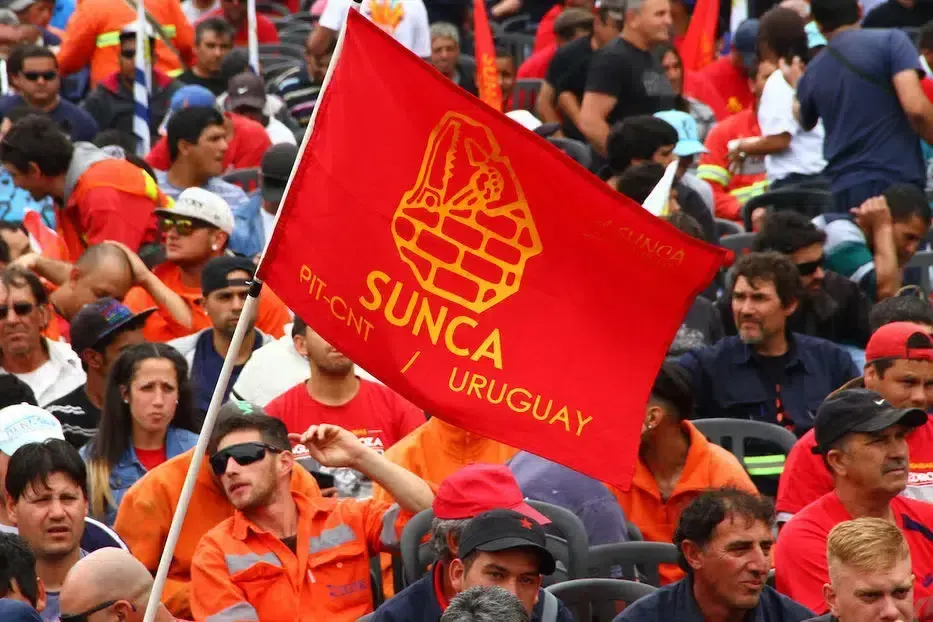

The atmosphere in the works is not the same as always. In the workshops, while having mid-morning coffee or chatting at the edge of the scaffolding, the issue is only one: the lack of progress in salary negotiations. This Tuesday, the Single National Union of Construction and Annexes (Sunca) confirmed what was brewing behind the scenes: a national strike of the entire industry for next July 1. The decision was not a surprise, but rather the outcome of three months of accumulated frustration at a negotiating table that, according to the leaders, is virtually deadlocked.
“Five meetings have already passed, reaching almost 90 days without a collective agreement,” they fired from the union's National Executive Committee. The data is eloquent. For the worker who puts his body under the sun or the cold every day, the clock is ticking and the uncertainty about his working conditions begins to weigh more than the cement he carries on his back.
From the scaffolding to the street: the fight plan
It's not just unemployment. Sunca activated a “turtle plan” that is already felt in the pace of the works. From this moment, overtime is suspended and the possibility of accepting schedule changes has been cut, a measure that seeks to show strength at a critical moment. Meanwhile, uncoordinated assemblies and zonal plenaries begin to be replicated, transforming the landscape of the works into spaces for constant debate about the future of the sector.
In the neighborhoods, the information brigades are already spreading the message. The slogan is clear: “In these Salary Councils, let's move the needle.” The tone of the statement, beyond the union formality, is one of exhaustion that does not allow any more waiting. The government and business chambers now have less than two weeks to unblock a negotiation that seems to have reached a point of no return.
The weight of a key industry
Construction in Uruguay is not just any sector. It is the engine that moves thousands of families and one of the clearest references on the thermometer of the real economy. A national Sunca strike is not just a desk conflict; It translates into stopped cranes, stretched delivery times and a warning signal that runs across the entire political spectrum.
The union made it clear that each department will have the key to define how the strike schedules are implemented on July 1. This means that the measure may be disparate across the territory, but the impact will be massive. While the union delegates tour the construction sites with the document in hand, the foremen and businessmen watch with concern as the possibility of a short-term negotiated solution crumbles.
A pulse without margin of error
The question that remains is how much the parties will resist. The government, trapped in a negotiation that is getting out of hand, knows that a total stoppage of construction in the middle of winter is not a good political sign. For its part, Sunca, with its historic power of mobilization, has already shown that it is not afraid to go all out if it feels that the collective agreement is rejected.
July 1 appears on the calendar as a deadline, a red line that the union drew on the table. For the worker, the objective is clear: recover the lost ground. For companies, the crossroads is cost. Between them, the country is preparing for a day that, far from being a normal work day, will be a demonstration of force that will be felt in every corner of the national territory.
Subscribe to Uruguay Al Día
Receive the most important news directly in your email. Clear, independent and updated information every day.
Follow us on WhatsApp
Join our official channel and receive alerts, news and exclusive content from Uruguay Al Día.
🔔 Join the WhatsApp channel