A surprising find on the Bering Land Bridge
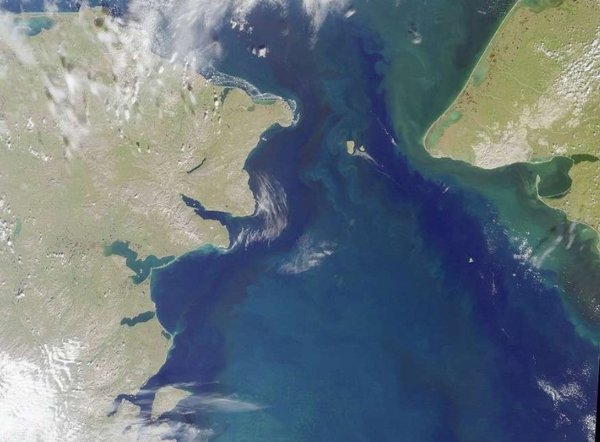
A recent study reveals that the Bering Land Bridge, which connected Asia and Alaska, may have existed approximately 35,000 years ago, much earlier than previously estimated. This research, published in the September edition of the journal Quaternary Science Advances, modifies the understanding of the period of human migration to America, coinciding with findings of 23,000-year-old footprints in White Sands National Park, in New Mexico.
The importance of the Land Bridge
The study's researchers have indicated that humans may have inhabited the Land Bridge region shortly after it was exposed. This is significant, since it is related to the theory of the migration of human populations to the American continent. During ice ages, the Earth experiences cycles in which ice covers large portions of its surface, and sea level drops as water freezes into sheets of ice. At the end of these cold seasons and with the increase in temperatures, the glaciers melt, causing an increase in sea level.
Revisiting previous theories about sea level
Previous research indicated that during the Last Glacial Maximum, sea level was approximately 130 meters lower than today, leading scientists to conclude that the Bering Land Bridge had been above water for about 70,000 years. However, Jesse Farmer, an associate professor at the School of the Environment at the University of Massachusetts Boston and co-author of the new study, noted that there are uncertainties in these estimates.
The complexity of sea levels in the past
Farmer explained that it is not possible to accurately determine sea levels in that period, pointing out that there could be an uncertainty of between 10 and 20 meters. Furthermore, he emphasized that the interest lies not in the global average, but in the specific conditions of the Bering Strait, where the pressure exerted by the ice could have raised sea levels locally.
New discoveries about the bridge flooding
A paper published in PNAS in 2023 by Farmer and his team revealed that the Bering Land Bridge may have been flooded between 46,000 and 35,700 years ago, suggesting that it was not exposed for land crossings until after that period. Evidence from ocean sediments indicates that nutrients from the Pacific Ocean began entering the Arctic Ocean during that time, implying that the Bering Strait may have been open.
Implications for human migration
These findings suggest that the Bering Land Bridge could have only reopened around 10,000 years before the height of the last ice age, a fact that modifies theories about human migration to the New World. One of the questions that arises is which human lineages, whether our ancestors or extinct relatives, made this journey to America.
The role of fossils in research
Analyzes of fossils of ancient animals, dating back up to 46,000 years, both in Eurasia and the Americas, such as mammoths, bison, lions and bears, support the idea that the Bering Land Bridge opened later than previously believed, much closer to the Last Glacial Maximum. Computer models that simulate the migrations of these species, based on fossil deposits, suggest that the land bridge was closed during the period indicated in the 2023 article.
A story told by different data
Farmer mentions that these are “two completely different sets of data that tell the same story,” which reinforces the validity of the new theories. Although the Bering Land Bridge may not have opened until later than previously thought, there are indications that the ancestors of modern Inuit had maritime knowledge that could have allowed ancient humans to reach the Americas by sea, similar to the migrations to Australia and New Guinea.
The possibility of maritime migrations
Buvit, another researcher involved in the study, stressed that any human migration to America before 40,000 to 35,000 years ago would have required boats and the ability to navigate the open sea. “As far as we know, this was only achieved by anatomically modern humans,” he added, suggesting that navigation could have been crucial to the early colonization of the Americas.
Conclusions on migration to America
This new study on the Bering Land Bridge not only changes the timeline of human migration to the Americas, but also raises new questions about how and when humans arrived on this continent. With each discovery, scientists advance our understanding of human history and their interactions with the environment in which they developed.
The future of research in human migrations
As research continues into the Bering Land Bridge and other aspects of human migration, new findings are likely to emerge that challenge and enrich our understanding of human history. Exploration and analysis of geological data, fossils, and other historical records will continue to be instrumental in unraveling the mysteries of the migratory journeys that shaped humanity as we know it today.
Leave your comment
To comment you must be registered and logged in.
Comments (0)
There are no comments yet.