

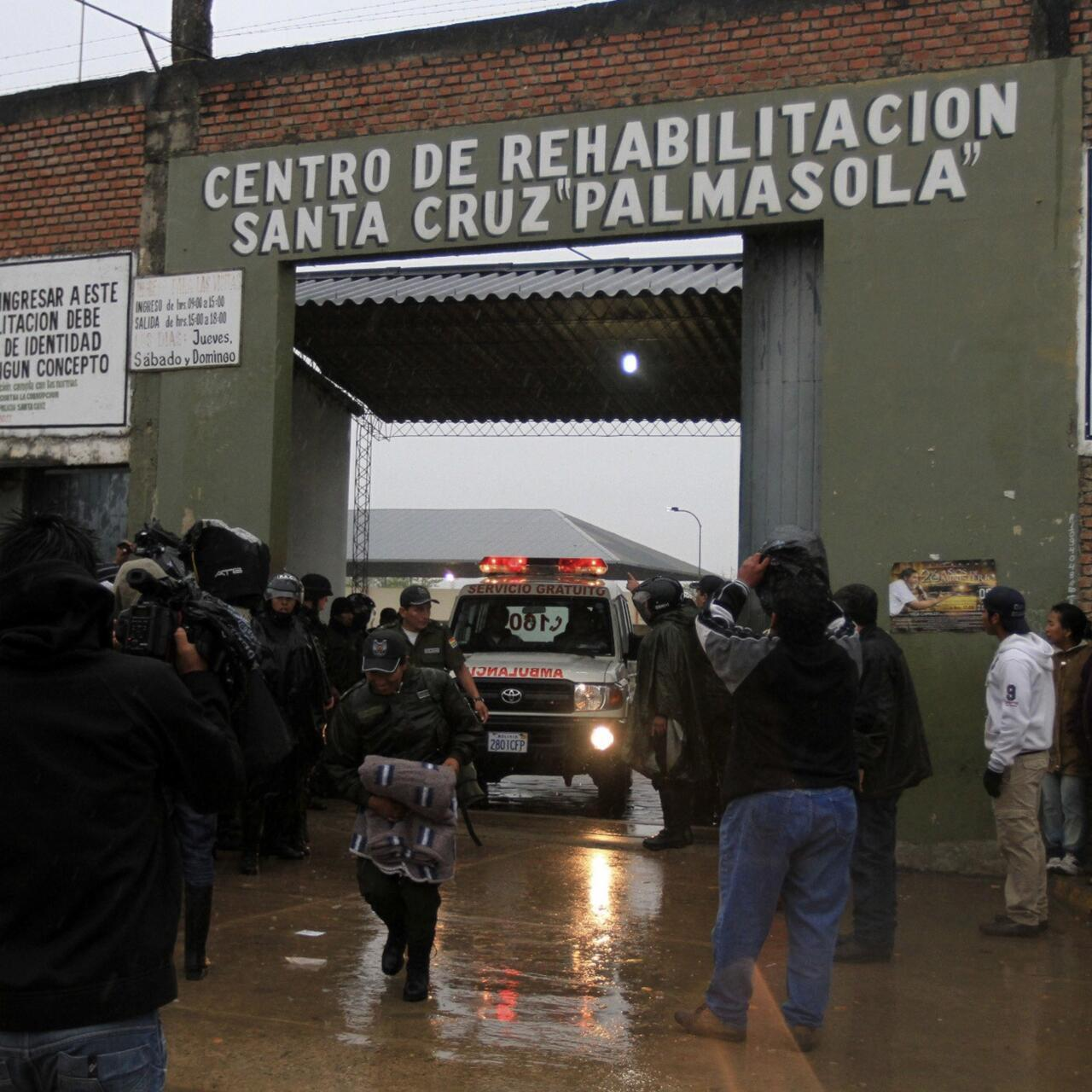
The air in Palmasola, the largest and most convulsed prison in Santa Cruz de la Sierra, is not exactly a balm for health. There, between walls that know well the tension of the Bolivian prison system, Tatiana Marset Alba goes through her days with an anguish that she could no longer keep silent. The sister of Sebastián Marset, the name that shook the foundations of regional drug trafficking, decided that it was time to scream: she says that her body shuts down and that, on the other side of the fence, she only receives painkillers while her clinical condition becomes more complicated.
Through a letter that ended up in the hands of the local press in Bolivia, Marset detailed what he describes as a race against time. The story is raw. He comments that everything started weeks ago, with punctures in his left side and pain that blocked his legs, preventing him from walking normally. “I can't take it anymore,” seems to be the implicit message between the lines. According to him, the initial diagnosis inside the prison was confusing—they spoke of hepatitis A—but the private doctors he was able to contact pointed to something much more delicate: acute pancreatitis that, without the correct treatment, can be fatal.
A labyrinth of bureaucracy and pain
The scene that Tatiana describes borders on negligence. She says that they took her to the San Juan de Dios Hospital for rigorous studies, but that, as soon as they were finished, they sent her back to the cell as if the problem had been solved with a discharge paper. The problem is that the pain did not subside; On the contrary, it came back stronger. Now, its treatment is limited to injections and pills that barely calm the symptom, without attacking the root of the condition.
What generates the most irritation in his legal team, led by Mónica Terrazas, is the existence of a judicial authorization that would allow him to leave for treatment in an appropriate environment. However, in practice, that door remains closed. While her brother Sebastián's case - now in the hands of the United States justice system - continues to advance, she remains in the eye of the hurricane, trapped in a limbo where health seems to be a secondary variable.
The fear of those who cannot find answers
“I don't want privileges, I want them to respect my health,” he says in a section of the text. The phrase, although it may be read with skepticism given the history of his last name, resonates in a prison system where sanitary conditions are, at best, precarious. Tatiana says she also suffers from kidney stones, a combo that, added to possible pancreatitis, has her on edge.
While the Palmasola authorities remain silent, uncertainty increases. The Santa Cruz prison is not a place that is characterized by the speed in caring for its inmates, and even less so when the name on the entry register is “Marset”. Is it administrative negligence or is there something else behind this delay? While the question remains in the air, Tatiana insists that every hour that passes without proper attention is a lost opportunity to save her life.
The case of the Marset family continues to add chapters, but this one, Tatiana's, is written with the language of physical pain. For now, within the walls of Palmasola, his complaint is a cry in the desert, a request for help that tests, once again, the capacity of the Bolivian judicial system to guarantee, at least, the survival of those in its custody.
Subscribe to Uruguay Al Día
Receive the most important news directly in your email. Clear, independent and updated information every day.
Follow us on WhatsApp
Join our official channel and receive alerts, news and exclusive content from Uruguay Al Día.
🔔 Join the WhatsApp channel