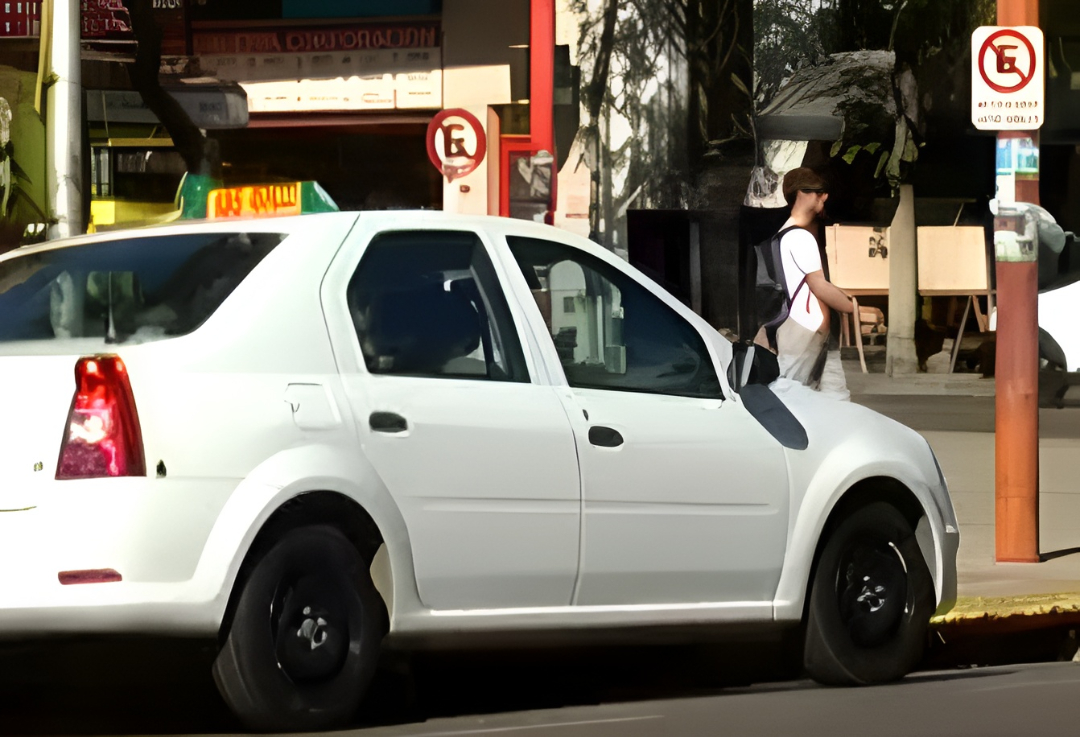
The Municipality of Salto does not relax its fight against clandestine transportation. During the inspection operations carried out this weekend, the Traffic Management area proceeded to remove a license plate corresponding to a vehicle that operated as a taxi without official authorization, what is popularly known as a "truck taxi." The measure was applied within the framework of Departmental Decree No. 6732/2014, which enables municipal inspectors to act in the event of this type of infractions.
With this new seizure, the total number of license plates removed for irregular transportation of passengers amounts to four, adding this weekend's to the three obtained in previous controls. In all cases, an administrative file is initiated which is then sent to the Legal Area of the Municipality for formal processing.
Specialized controls and field work
The operations are not casual or improvised. Traffic Management stressed that inspections are carried out by officials specially trained to identify the provision of paid transportation services without the corresponding authorization. In each case, inspectors collect detailed information about the characteristics of the trip: origin, destination, fare charged and condition of the vehicle.
This type of field work seeks to protect both those who use the transportation service and the taximeters who do comply with all legal requirements and bear the costs of authorization, technical review and mandatory insurance.
In that sense, the municipal area reminded taximeter users of the importance of verifying, before paying for the trip, that the unit visibly displays the official fare sheet. This document reflects the current tariff schedule, approved by the Ministry of Economy and Finance and ratified by the Municipality of Salto. Its display is not optional: it is an obligation that guarantees transparency and gives certainty to the passenger about how much they must pay for the service.
Motorcycles in violation and risky maneuvers
During the same inspection day, the operations also resulted in the seizure of two motorcycles that were circulating in an irregular situation and carrying out dangerous maneuvers known as "willy", that is, lifting the front wheel while traveling at speed. This type of behavior puts not only the driver but also pedestrians and other vehicles that share the road at risk.
A project of 33 articles to regulate Uber and Cabify
In parallel to the inspection tasks, the mayor of Salto, Carlos Albisu, took a significant step by sending to the Departmental Board a draft decree that seeks to regulate and enable the operation of passenger transport applications such as Uber, Cabify and other similar platforms. The proposal consists of 33 articles and represents a concrete commitment to modernize the regulatory framework for transportation in the department.
The Departmental Executive understands that having clear regulation for these platforms will not only organize the market, but will also contribute to reducing irregular transportation, improving road safety and expanding the mobility options available to Salteños. The initiative comes at a time when cities across the country are debating how to incorporate these applications into a legal scheme that protects both users and workers in the sector.
The progress of this project, added to the continuity of controls on public roads, marks a double strategy of the departmental government: sanctioning what operates outside the law while building a regulatory path for the new forms of transportation that technology has brought with it.