

The laboratory of secularism in front of the mirror: the crisis of a generation that has everything except a “why”
Uruguay has become a global case study for its legislative audacity. We are the country of regulated cannabis, legal abortion and assisted euthanasia. However, behind the headlines that position us as the “Switzerland of America” in civil liberties, the numbers tell a story of hopelessness. He suicide in Uruguay It is not an isolated statistical data; It is the cry of a society that, after separating the State from the sacred and culture from mystery, seems to have been left without anchors. In 2024, the rate reached 21.35 per 100,000 inhabitants, a figure that places us in front of an inescapable reality: material progress has not managed to fill the existential void.
The Batllist experiment and the withdrawal of transcendence
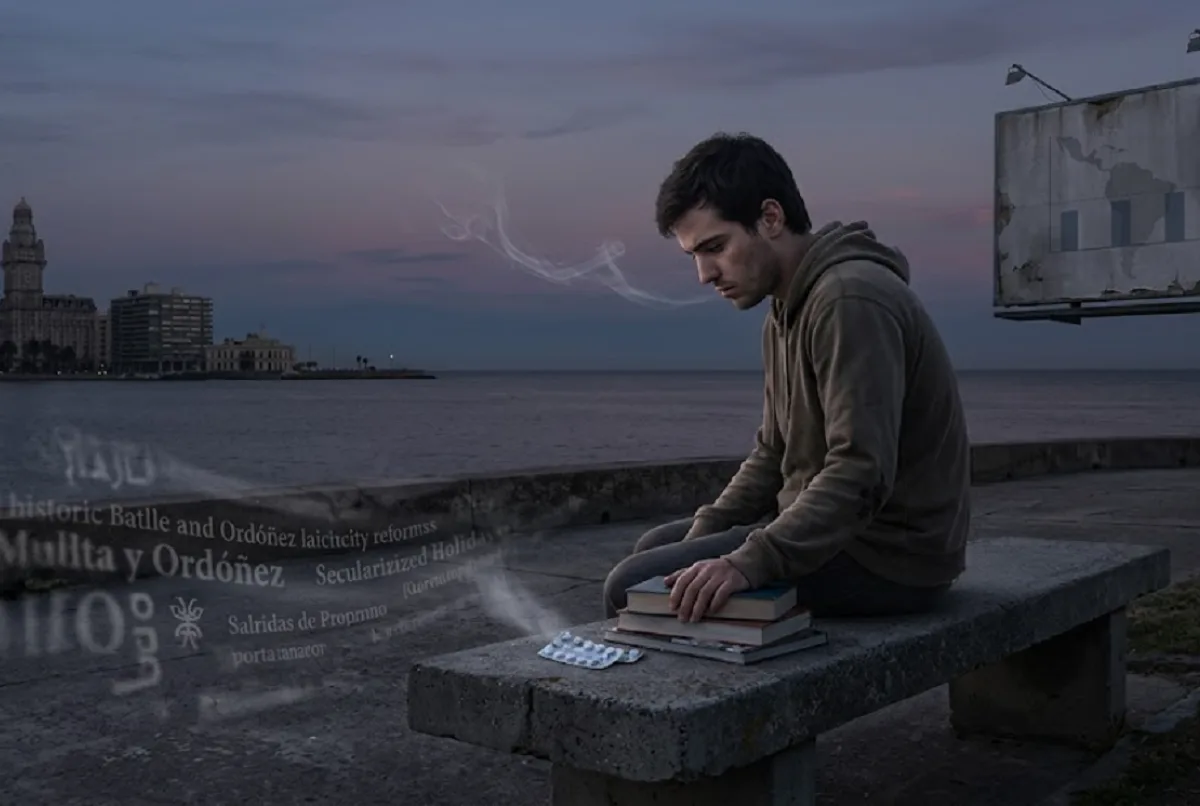
To understand the Uruguay of 2026, it is imperative to look back. The country's philosophical architecture was designed by José Batlle y Ordóñez, who understood that modernity required emptying public space of transcendent references. The secularization was total: Easter became Tourism Day and Christmas became Family Day. For decades, this model operated under the wing of a strong State that replaced faith. But today, when the state bureaucracy no longer offers mystique and the political parties politicians lose their burden ideological, the citizen is left alone facing nothingness.
The problem with auditing a long-term philosophical experiment is that the results take decades to manifest. What we see today in youth between 20 and 24 years old—the group with the greatest growth in self-elimination rates—is the result of a culture that rewards individual autonomy but does not offer a collective purpose. The “right to be” has been transformed into the obligation to manage oneself in an increasingly atomized market of meanings.
The pharmacy as a refuge from anguish
In this scenario, the institutional response has been the medicalization of sadness. Uruguay is a country where tranquilizers are the third most consumed drug. According to data from the National Drug Board, 13% of university students have resorted to psychotropic drugs in the last year, almost half without a prescription. We have learned to speak the language of psychiatry manuals (anxiety, depression, major episodes) to name what, in other times, was called a crisis of soul or lack of horizon.
The paradox is cruel: the health system is proud of its prevention network suicide in Uruguay, but at the same time it facilitates a culture of anesthesia. If the pain is unbearable, you take medication; If life becomes complex, the end is attended. The autonomy narrative has led us to normalize surrender. Under the umbrella of “inevitable progress,” we have legislated to make abandonment dignified, instead of asking why living has become a so heavy load for so many.
The weight of institutionalized mediocrity
Added to this is a leveling culture that punishes excellence. The ideal of the average citizen, discreetly prosperous and without great pretensions, has generated a glass ceiling made of tedium. The most talented young people are not fleeing economic misery, but rather moral stagnation. In a country that views with suspicion those who fervently believe in something—be it the nation, family, or merit—comfortable mediocrity becomes the social pact returns par excellence.
Uruguay does not faces a threat external, but an exhaustion of its own story. Like ancient Rome, administrative rights have replaced moral identity. A civilization that no longer believes in its own continuity is a civilization that begins to die elegantly, financed by the state and regulated by advanced laws. To reverse the rate of suicide in Uruguay, the path is not only to put more psychologists in high schools, but to have the courage to rebuild a purpose that transcends the individual. A society that only offers freedoms to die ends up forgetting the reasons to live.
Subscribe to Uruguay Al Día
Receive the most important news directly in your email. Clear, independent and updated information every day.
Follow us on WhatsApp
Join our official channel and receive alerts, news and exclusive content from Uruguay Al Día.
🔔 Join the WhatsApp channel