

The echo of the massacre in Eastern Ghouta
In a corner of the world where war has left deep scars, Syria's Interior Minister Anas Khatab has made an announcement that has resonated through the halls of power and the streets of Damascus. The arrest of Adnan Aboud Halawa, a major general identified as one of the main perpetrators of the chemical massacre in Eastern Ghouta in 2013, has reopened old wounds. This fact is not only a political move, but a reminder of the brutality that has marked Syria's recent history.
The Eastern Ghouta massacre, a dark episode in the Syrian conflict, left a devastating toll. Although exact figures are difficult to determine, there are rumors of hundreds of deaths, many of them civilians. The Syrian Network for Human Rights, in a report commemorating the twelfth anniversary of the attacks, mentions that 1,144 people lost their lives due to asphyxiation, a chilling figure that highlights the magnitude of the tragedy. Among the victims, 99 were children and 194 were adult women, underscoring the cruelty of an attack that did not distinguish between combatants and civilians.
An arrest that does not erase the past
Halawa's arrest, according to Khatab, is part of a broader effort by Ahmed al Shara's government to hold accountable those who perpetrated crimes during Bashar al Assad's regime. However, many wonder if this action is genuine or simply an attempt to clean up the image of the current government. In a country where distrust of institutions is palpable, the arrest of a senior officer may seem more like a strategic move than a true commitment to justice.
Social networks have exploded with reactions. Some celebrate the news as a step towards justice, while others see it as mere spectacle. In a context where collective memory is marked by pain and loss, the figure of Halawa becomes a symbol of the impunity that has reigned for years. The question that hangs in the air is whether this arrest will change anything in the lives of Syrians who have suffered firsthand the consequences of an endless conflict.
The shadow of war and its consequences
The war in Syria has left a legacy of suffering that is felt in every corner of the country. Families who lost loved ones in Eastern Ghouta continue to search for answers, while survivors grapple with the physical and psychological aftermath of the attacks. Exposure to toxic gases has left thousands with respiratory symptoms, a constant reminder of the barbarism unleashed on their home.
In the midst of this panorama, the Al Shara government faces the challenge of rebuilding not only the infrastructure, but also the trust of a people who have witnessed atrocities. Halawa's arrest could be seen as an attempt at reconciliation, but many wonder if it is enough to heal the open wounds. The memory of Eastern Ghouta is still alive in the collective consciousness, and justice seems a distant concept.
An uncertain future
Syria's future is uncertain. The arrest of a high-ranking officer does not guarantee that justice will be done for the crimes committed. Recent history is full of broken promises and a judicial system that has been unable to confront the magnitude of abuses. The international community is watching closely, but effective intervention remains a matter of debate.
Meanwhile, life in Syria continues its course, marked by the daily struggle of those trying to rebuild their lives in the midst of chaos. Halawa's arrest may be a step, but the road to truth and reconciliation is long and full of obstacles. The memory of Eastern Ghouta, with its victims and its survivors, remains a reminder that peace is not achieved with arrests alone, but with a real commitment to justice and reparation.
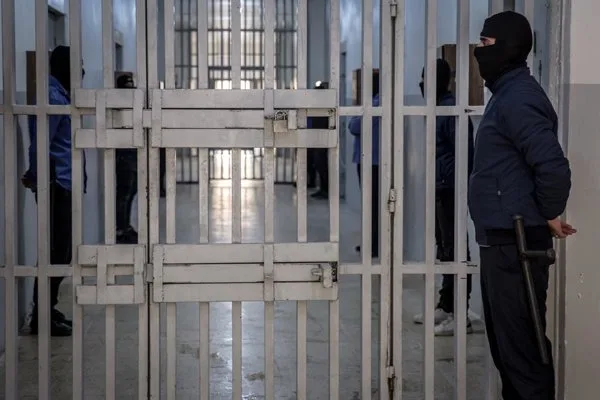
Major General Adnan Aboud Halawa is in the custody of the Counter-Terrorism Department.
Subscribe to Uruguay Al Día
Receive the most important news directly in your email. Clear, independent and updated information every day.
Follow us on WhatsApp
Join our official channel and receive alerts, news and exclusive content from Uruguay Al Día.
🔔 Join the WhatsApp channel