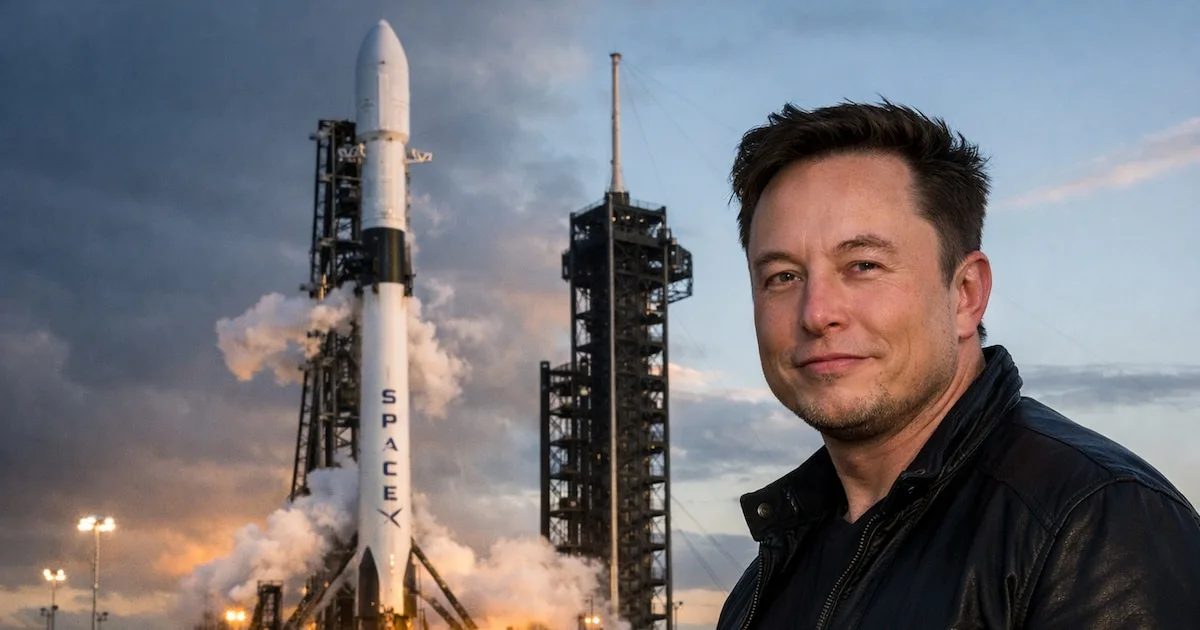


In a corner of Texas, anticipation is at its peak. A metal giant, the Starship V3, stands at Starbase, ready to challenge the skies. This colossal ship is Elon Musk's new bet in his relentless race to the Moon.
The launch, scheduled for May 21, 2026, is not just another event. It is a declaration of intent. Musk seeks to position SpaceX as NASA's key partner in the Artemis IV mission, a project that promises to take humanity back to Earth's natural satellite.
The technological leap of Starship V3
The Starship V3 is not simply a larger rocket; It is an evolutionary leap in space technology. At 123 meters high, this colossus surpasses its predecessors and redefines the limits of space exploration. Inside, 33 Raptor 3 engines roar with unprecedented power, capable of generating a total thrust of 9,240 tons.
This advance is not merely technical. In the Boca Chica desert, every worker knows they are building not just a machine, but a piece of history. Starship's innovative design includes a hot separation system that promises to improve post-flight recovery, a vital feature for sustained missions.
The payload capacity of the Starship V3 has also been tripled. It can now carry up to 100 tons, a crucial advance for future missions to Mars and beyond. But it's not just the size that matters; It is efficiency and the ability to quickly adapt technology to mission needs.
A logistical challenge on land and in space
The launch is not a simple spectacle for SpaceX engineers. In the days before, the bustle at the Starbase facilities is constant. Screws are tightened, connections are checked, and procedures are reviewed over and over again. Accuracy is key, and any errors could mean a costly delay.
Starship V3 is designed to refuel in zero gravity, an advance that opens the door to interplanetary missions. In simulations, it has been shown that the spacecraft can operate autonomously for 48 hours in orbit, a capability that eliminates dependence on solar panels.
The silence at Starbase is palpable as the countdown begins. The engineers' faces are illuminated by the control screens, reflecting a mix of concentration and expectation. This is the culmination of years of work, sleepless nights, and overcoming countless technical challenges.
The promise of Starship for NASA
For NASA, Starship V3 represents an attractive option for the Artemis IV mission. The ability to dock with the Orion capsule and its potential to carry out high-precision approach operations are undeniable advantages. However, the real challenge is to demonstrate these capabilities in a real-world environment.
In the SpaceX offices, the route maps to the Moon are littered with notes and calculations. Each line and each figure tells a story of ambition and risk. The race is on, and time is a luxury that neither Musk nor NASA can afford to waste.
Meanwhile, the families of SpaceX workers are following the event from their homes. For them, the project is not just a job, but a source of pride. Conversations at family dinners revolve around the mission, and children dream of stars and planets.
Expectations are high and the pressure is palpable. In the hallways of SpaceX, whispered conversations reflect both the stress and excitement of the moment. Every employee feels like they are participating in something much bigger than themselves.
Impact and expectations
The space industry watches with interest. In forums and conferences, the name Starship V3 resonates strongly. Experts agree: if this rocket achieves its goal, it will mark the beginning of a new era in space exploration.
Meanwhile, in the cafes near Starbase, SpaceX employees discuss the future. For many, it is more than a job; It is a shared dream. The launch of Starship V3 will not only bring technology to space, but will also raise the hopes of a humanity that once again looks to the stars.
The repercussions of the success or failure of Starship V3 will be felt far beyond Texas. In cities like Houston and beyond, aerospace companies are closely monitoring SpaceX's progress. Investments and future contracts depend on the performance of this rocket.
The Starship V3 is more than a technological achievement; It is a symbol of what can be achieved when innovation meets ambition. As the countdown progresses, every second feels eternal. The world watches, waiting for this metal colossus to open new frontiers for humanity.
The impact on the local community is also notable. Business in the vicinity of Starbase has flourished with the arrival of engineers and scientists. Restaurants and hotels are full, and the atmosphere is one of optimism and anticipation.
The Starship V3 is a promise for the future, a bridge to new possibilities. As the rocket prepares for launch, the hopes of thousands of people rise with it. It is a moment of unity, where science and dreams intertwine in a journey into the unknown.
Subscribe to Uruguay Al Día
Receive the most important news directly in your email. Clear, independent and updated information every day.
Follow us on WhatsApp
Join our official channel and receive alerts, news and exclusive content from Uruguay Al Día.
🔔 Join the WhatsApp channel