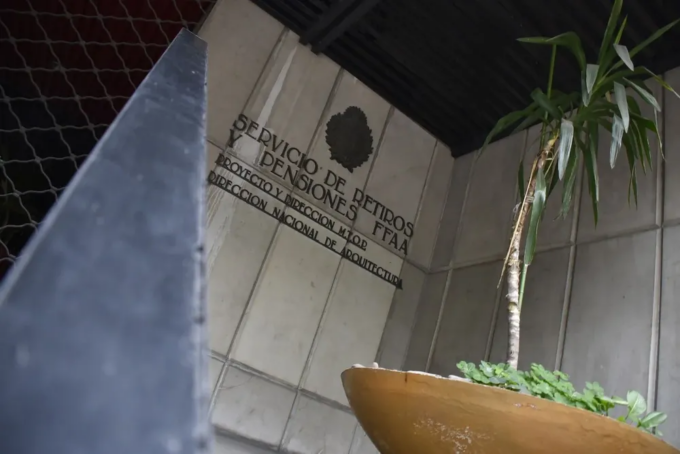


While the average citizen juggles the cost of living and rate adjustments, employees of Uruguayan public banks have a reason to look at the calendar with optimism. February 2027 already has a financial name and surname: a “one-time special item” that, together, will inject some 2.2 million dollars into the pockets of the staff of Banco República (BROU), Banco Hipotecario (BHU), Banco de Seguros del Estado (BSE) and the Central Bank (BCU).
The pre-agreement, which is signed by AEBU and approved by the Executive, is not an isolated event. It is the continuation of a logic that has already been applied in other autonomous entities, where millions were distributed under the premise of encouraging the “climate of dialogue.” But is it really an incentive for dialogue or a way to close salary agreements without touching structures that often turn out to be heavy and inefficient? The question hangs in the air, especially when analyzing the fine print of an agreement that goes far beyond a simple money transfer.
An agreement with more than just tickets
The agreement is not just about money. AEBU and the government took advantage of the event to open the door to a discussion that promises controversy: the change in public service hours. Official banking, which often seems to live in another era, faces the mirror of the private sector, which has already migrated to morning attention. It is a necessary movement, but one that is negotiated with the currency of exchange of more benefits.
Internally, the official justification points out that these items are tools to unblock management and obtain the collaboration of officials in the modernization of the institutions. However, for the taxpayer, the reading is usually different: an “extra” is paid so that employees feel comfortable while trying, hopefully, for the State to function a little better. According to a recent analysis by the weekly Search, the individual amounts that each employee will receive are close to 14,000 pesos, a figure that, although it does not seem exorbitant, multiplies state spending levels by thousands.
Licenses, benefits and the shadow of efficiency
If you stop to read the entire agreement, you will find a list of benefits that make any private sector employee—the same one who pays the taxes that finance these entities—sigh with envy. From extended leave to care for newborns to days off to attend school meetings, the agreement seems more like a workplace wellness manual than an agreement aimed at improving productivity.
Also included are “clean salary” schemes for indebted officials and promotions for access to housing. It is evident that, in the negotiation, the unions have played a master hand, managing to protect rights and benefits in a context where the private sector can barely maintain the current conditions. The big question remains whether, at the end of the day, the customer waiting in line at the branch will notice any improvement in the quality of service or if they will simply be financing a more pleasant “work environment” for the employee.
Change of era or state inertia?
The formation of a working group to analyze central service hours is the big carrot of the agreement. Everyone knows that the current schedule is uncompetitive and disconnected from modern habits, but the union uses it as another piece of the negotiating gear. It's not just about opening earlier; It is about what this government is willing to give up and what political cost this government is willing to pay for implementing fundamental changes.
The agreement is valid until the end of 2027, which means that the board was blocked for a long time. There will be salary adjustments tied to inflation goals and a series of commitments that, in theory, seek efficiency. But, in the halls of public administration, history has taught us that management promises are often much lighter than concrete payments. While the 2.2 million dollars wait in the safe deposit box in 2027, the user continues waiting for the State, in addition to paying, to really start working.
Subscribe to Uruguay Al Día
Receive the most important news directly in your email. Clear, independent and updated information every day.
Follow us on WhatsApp
Join our official channel and receive alerts, news and exclusive content from Uruguay Al Día.
🔔 Join the WhatsApp channel