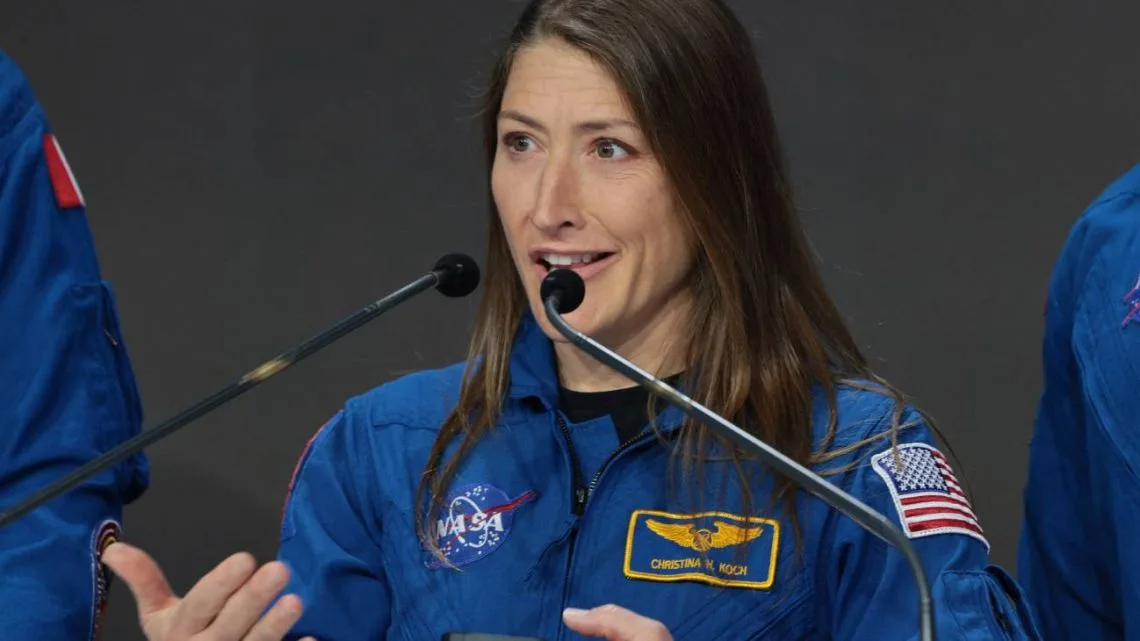


NASA astronaut Christina Koch has brought the spotlight back to the physical and sensory challenges that come with traveling to space by sharing her experiences during the Artemis II mission. In a recent interview, Koch related how “the body loses habitual references, and that affects tasks such as orienting or moving,” underlining the complexity of readjusting to life on Earth after a space mission.
Space adaptation syndrome: a challenge for astronauts
One of the most significant challenges astronauts face is the so-called space adaptation syndrome (SAS). This phenomenon affects approximately 70% of astronauts during their first days in space. It is characterized by symptoms similar to motion sickness, such as nausea, disorientation, vertigo and even vomiting, and its main cause is the absence of gravity.
In microgravity conditions, the functioning of the inner ear, which is crucial for balance, is altered. On Earth, this system is synchronized with other senses, but in space, that coordination breaks down. According to Koch, at the beginning of his mission with Artemis II, “every time I woke up, I thought I was floating,” illustrating the sensory confusion experienced.
The science behind adaptation
Jennifer Fogarty, senior scientist at NASA's Human Research Program, explained that “the brain receives conflicting signals between what the eyes see and what the inner ear perceives, causing temporary confusion.” This disorientation usually lasts between 48 and 72 hours, although in some cases it can be extended, depending on the individual physiology of each astronaut.
Christina Koch, who holds the female record for continuous stay in space with 328 days aboard the International Space Station, emphasized that these sensations are not merely anecdotal. They are part of a complex physiological process that affects almost all astronauts and can affect their performance during the first days of the mission.
Impact on space missions
NASA continues to evaluate and develop technologies to mitigate the effects of SAS. Currently, the Starship spacecraft and the Blue Moon lander are being considered for future missions, such as Artemis IV. However, the focus remains on preparing astronauts to face these sensory challenges.
The preparation includes not only physical training, but also cognitive adaptation exercises, in order to facilitate the process of retraining the brain to function in a microgravity environment. This aspect is crucial to ensure the success of space missions and the safety of the crew.
The challenge doesn't end when the astronauts return to Earth. Readaptation to Earth's gravity also requires time and effort, adding an additional layer of complexity to space missions. The experience shared by Koch not only highlights the challenges of life in space, but also underlines the resilience and adaptability of human beings.
The importance of continuous research
NASA continues to invest in research to better understand SAS and develop effective strategies to help astronauts adapt more quickly to both space and returning to Earth. These efforts are critical to the future of space exploration, especially long-duration missions to Mars and beyond.
Christina Koch, with her vast experience and contribution to knowledge on spatial adaptation, continues to be a central figure in these developments. Their testimony and that of other astronauts are essential to improve the conditions of future missions and guarantee the well-being of those who venture beyond our planet.
Subscribe to Uruguay Al Día
Receive the most important news directly in your email. Clear, independent and updated information every day.
Follow us on WhatsApp
Join our official channel and receive alerts, news and exclusive content from Uruguay Al Día.
🔔 Join the WhatsApp channel