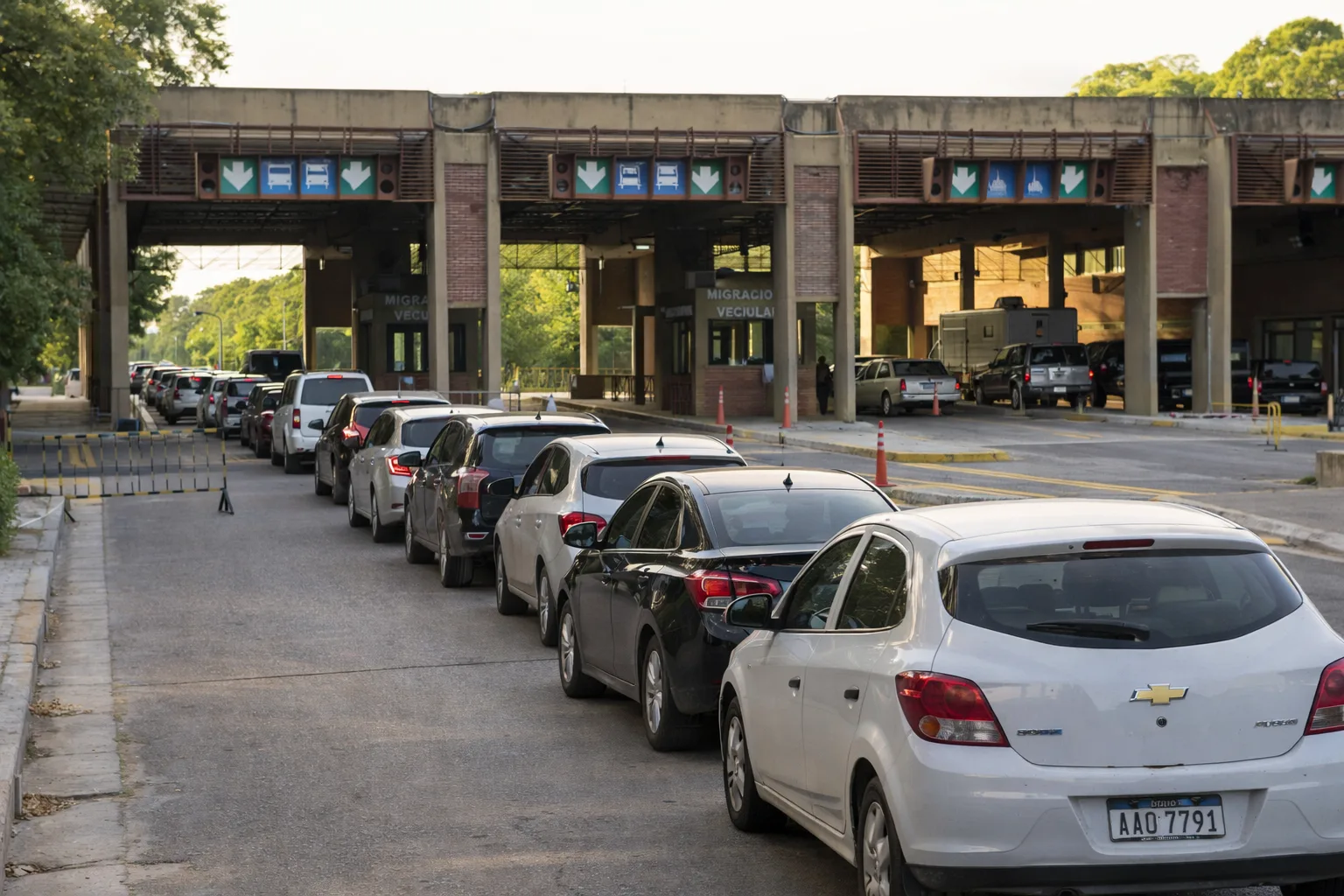


Queues Salto Concordia bridge It was the dominant image for much of this Friday at one of the main border crossings on the Uruguayan coast. Early on, traffic began to increase steadily, with long lines of vehicles moving slowly towards the Argentine city of Concordia, generating visible delays and traffic much higher than usual.
The movement did not respond to a specific event or an extraordinary tourist peak. Those waiting to cross agreed on a specific and repeated motivation: to load fuel on the Argentine side. A practice that, far from being new, is reintroduced with force every time the price difference between both countries becomes more noticeable.
During the day, Uruguay Up to Date He was able to talk to several drivers who remained in line. In their testimonies, a common feeling was repeated: filling the tank in Uruguay has become an expense that is difficult to sustain, even for those who use the vehicle as a work tool or for basic daily trips.
“I cross because I can't afford it,” summarized one of the interviewees. Others explained that, even with the economic difficulties that Argentina is going through, the price of fuel continues to be significantly lower than in Uruguay, which ends up pushing hundreds of people to make the crossing, take on the wait and face border delays.
Intense traffic was especially noticeable in the middle hours of the day. The lines moved slowly, while the constant flow of cars made it clear that these were not isolated cases. The postcard repeats itself: families, workers, children merchants and light carriers crossing the river in search of a difference that, in many cases, is decisive in making ends meet.
Beyond the specific information about the crossing, the situation exposes a deeper problem. He fuel price in Uruguay has become a constant pressure factor on the cost of living. It not only impacts those who carry gasoline or diesel, but it is transferred to transportation, food and services, generating a chain effect that ends up hitting the entire domestic economy.
In this context, the crossing to Concordia appears as an escape valve, although not without costs. Lost time, wear and tear on the vehicle and the uncertainty of encountering longer lines than expected are part of the scenario. However, for many, the alternative of loading in Uruguay directly is not viable.
The discomfort is perceived in the stories. There is no enthusiasm or walking spirit in those waiting in line. Instead, a mixture of resignation and anger predominates. Resignation for having to cross the border for a basic expense. Anger at the feeling that the domestic price of fuel has become disproportionate to income.
The situation recorded this Friday on the Salto–Concordia bridge is not an isolated event. In the first days of January, other border crossings in the country also showed delays and queues associated with crossing into Argentina, either to refuel or make purchases. On the coast, this dynamic is particularly felt strength through proximity and the relative ease of crossing.
For the city of Salto, the impact is visible. Traffic towards the bridge intensifies, bottlenecks are generated and normal circulation is altered. At the same time, the phenomenon reveals an increasing dependence on the price difference with the neighboring country to resolve essential expenses.
Meanwhile, the underlying debate still open. The cost of fuel in Uruguay continues to be noted as one of the highest in the region, and each episode of queues at border bridges puts the issue back on the table. It is not just about numbers, but about an everyday reality that pushes hundreds of people to cross the border for something as basic as filling up the tank.
Subscribe to Uruguay Al Día
Receive the most important news directly in your email. Clear, independent and updated information every day.
Follow us on WhatsApp
Join our official channel and receive alerts, news and exclusive content from Uruguay Al Día.
🔔 Join the WhatsApp channel