
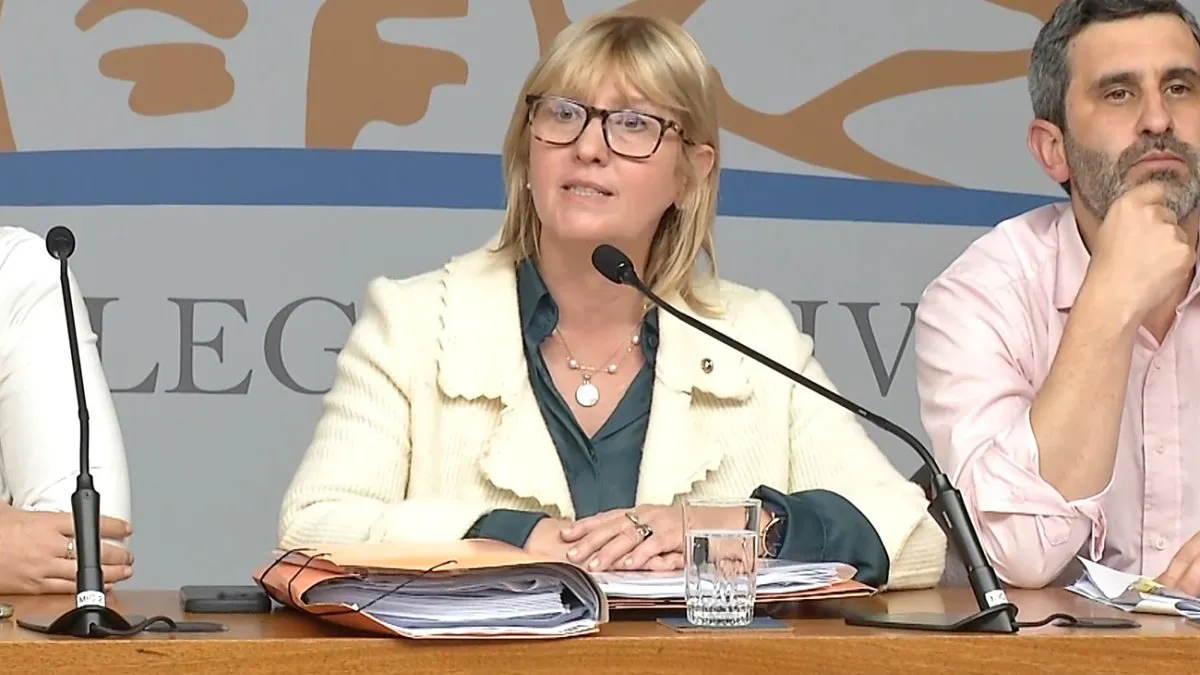


The top official of the Ministry of Public Health (MSP), Cristina Lustemberg, appeared on Tuesday before the legislators of the health commission of the lower house to report on the current state of the Lustemberg management and health system indicators. In an instance marked by the discussion about the financing and quality of essential services such as water in the metropolitan area, the minister sought to convey an image of institutional control and projection, despite the internal noises that have shaken the portfolio in recent weeks.
During her speech, the minister highlighted that the National Integrated Health System (SNIS) is going through a stage of stability, highlighting that its structure has redistributive justice that places the country in a competitive position at the international level. Lustemberg acknowledged that there are certain financial imbalances in specific providers, but emphasized that his administration's priority continues to be the incorporation of new benefits and improving access to drugs for chronic pathologies.
The impact of Lustemberg's management in the face of demographic challenges
The head of public health did not evade the challenges imposed by the aging population and the prevalence of non-communicable diseases in Uruguayan society. According to the minister, the system must constantly adapt to respond to the demand generated by longevity, which implies a technical review of the decrees that regulate waiting times and the delivery of prolonged medication. In this sense, he highlighted the recent signs of his management to facilitate access to treatments, forcing providers to guarantee prescriptions for periods of up to one year in specific cases.
However, the climate of technical calm was interrupted by questions about governance ministry internal. Lustemberg confirmed that he has received resignations within his cabinet, although he played down the drama by describing them as movements motivated by personal or academic reasons. However, the focus of tension is in the National Honorary Advisory Commission, where a group of members expressed their intention to abandon their positions in a clear sign of rejection of an administrative decision made by the minister herself
The controversial sanction that fractured the advisory commission
The origin of the conflict lies in the file of an anesthesiology professional who was found responsible for a tragic malpractice case in the year 2023. The incident, which led to the death of a pediatrician after a gallbladder operation, had already had consequences in criminal justice, where the doctor was sentenced to 24 months. In the administrative field, the technical commission had initially suggested a five-year disqualification from practicing the specialty, a measure that was ratified in 2024.
The crisis broke out when, under the Lustemberg management, it was decided to reduce said penalty from five to three years. The minister justified this move by pointing out that she acted under the strict advice of the Legal Directorate of the MSP and in respect for the right of defense of the professional involved. “It is a sad event that has moved me personally,” the leader stated before the press, clarifying that the anesthetist's rehabilitation will not be automatic, but will depend on a new evaluation by the academic chair of anesthesiology.
Political pressure and call to the Senate
The impact of these events was not limited to the corridors of the ministry. The senator of the National Party, Martín Lema, announced that he will once again summon the minister to the health commission of the Senate to provide detailed explanations about the wave of resignations and the criteria used to modify sanctions for malpractice. For the opposition, the departure of qualified technicians in disagreement with the leadership of the ministry could be a symptom of failures in the political leadership of the health
For his part, Lustemberg insisted that the process is under constant review and that each administrative step has been evaluated to guarantee the legal security of the organization. Meanwhile, public opinion is closely following the outcome of this internal crisis, in a context where confidence in the control mechanisms of the healthcare system It is essential for the peace of mind of users. The final resolution on the pending resignations and the firmness of the SNIS will be the axes that determine the success or erosion of the Lustemberg management in this section of his mandate
Subscribe to Uruguay Al Día
Receive the most important news directly in your email. Clear, independent and updated information every day.
Follow us on WhatsApp
Join our official channel and receive alerts, news and exclusive content from Uruguay Al Día.
🔔 Join the WhatsApp channel