
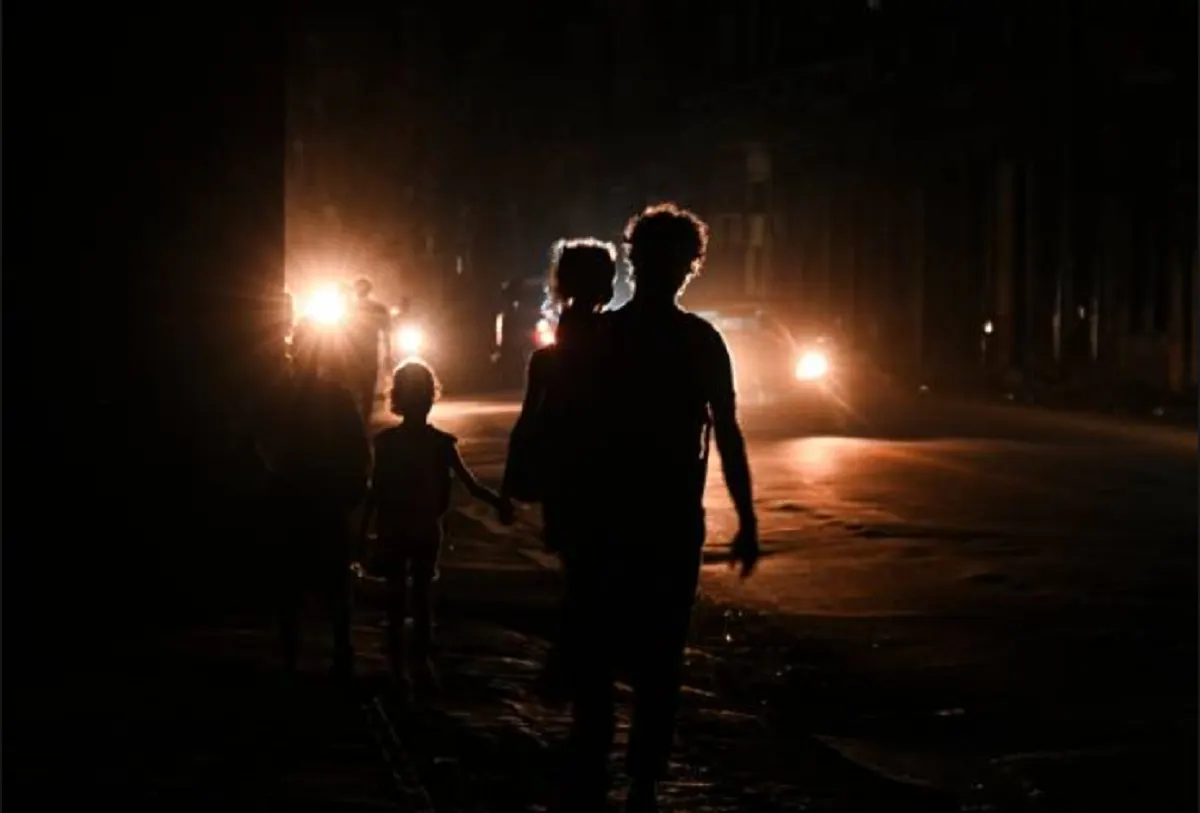


Energy crisis in Cuba leaves 60% of the island without electricity
The energy crisis in Cuba will reach a new critical point this Sunday: almost 60% of the island will be left in darkness due to the simultaneous collapse of several thermoelectric plants and the lack of fuel for distributed generation engines. The official report from the Electrical Union (UNE) confirmed that six plants are out of service and that dozens of smaller units remain paralyzed due to the lack of spare parts and lubricants.
The UNE estimated a generation capacity of 1,358 megawatts for the time of highest demand – between the afternoon and evening – compared to a maximum demand of 3,300 MW. The imbalance will cause a deficit of 1,942 MW and will force 2,012 MW to be disconnected to avoid uncontrolled blackouts. During the week, the outages reached record numbers: on Friday 61% were reported affected, on Saturday 60% and on Monday 59%. In the middle of the week, a partial blackout left the west of the country without electricity, with a real deficit of 67% in the area with the highest consumption.

The authorities recognize that the energy crisis in Cuba responds to recurring failures in thermoelectric plants, many of them obsolete, and to the lack of foreign currency to import oil. Currently, six of the 16 units in operation They are out of service due to technical defects or maintenance. Thermoelectric generation represents close to 40% of the national energy matrix. Added to this is the paralysis of 100 distributed generation plants with diesel and fuel oil engines, inoperative due to lack of fuel. An additional dozen are stopped due to lack of lubricant.
The Minister of Energy and Mines, Vicente de la O Levy, admitted that 2025 has been “very difficult and very tense”, with electricity outages of up to 24 hours in some regions. He anticipated that 2026 will also be “difficult” due to the persistence of the lack of foreign currency, although he projected a “slight decrease” in blackouts thanks to maintenance and new generation sources. The official explained that almost all the engines equivalent to 1,000 MW installed remain out of service due to lack of fuel. He also highlighted the complexity of keeping the National Interconnected Electrical System operational, which supplies the majority of the population.
Among the mitigation measures, O Levy mentioned the entry into operation of four thermoelectric units that received comprehensive maintenance this year. Two are already operational and two others could be synchronized shortly. In addition, the country will close the year with an installed capacity of 1,000 MW in solar parks, within the framework of a plan supported by China to develop medium hundreds of installations. Until November, the UNE reported 33 in operation. However, independent experts warn that the energy crisis in Cuba is structural and that the full modernization of the system would require between 8,000 and 10,000 million dollars in investments.

External factors and sanctions
He Cuban regime maintains that the sanctions Americans hinder the acquisition of equipment and supplies, generating “energy asphyxiation.” Meanwhile, the authorities anticipate a reduction in the duration of the cuts by 2026, although they admit that it will not be possible to eliminate them completely. The energy crisis in Cuba, marked by decades of underfinancing since nationalization in 1959, exposes the difficulties of a system that combines technological obsolescence, lack of foreign currency and dependence on fossil fuels.
Will the regime be able to find a sustainable solution to an energy crisis that threatens to darken the island's immediate future?
Subscribe to Uruguay Al Día
Receive the most important news directly in your email. Clear, independent and updated information every day.
Follow us on WhatsApp
Join our official channel and receive alerts, news and exclusive content from Uruguay Al Día.
🔔 Join the WhatsApp channel