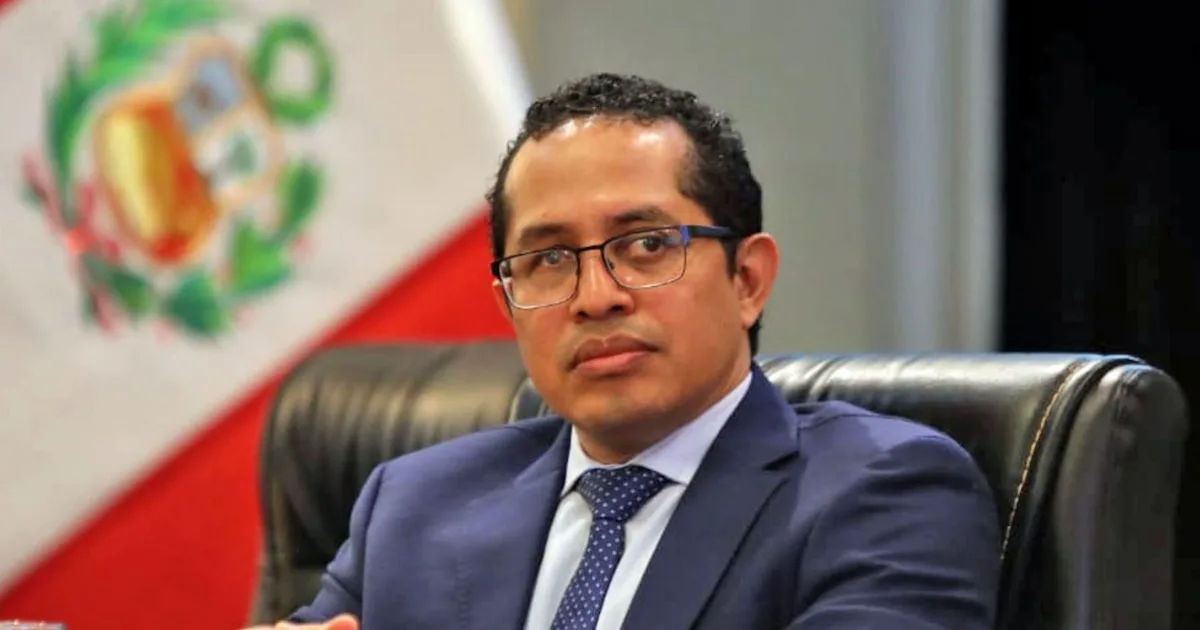


In a recent and forceful interview with the newspaper El Comercio, the president of the National Election Jury (JNE) of Peru, Roberto Burneo, launched serious accusations against the former head of the National Office of Electoral Processes (ONPE), Piero Corvetto. According to Burneo, Corvetto falsely claimed that the electoral material was completely deployed on April 12, when in reality hundreds of voting locations in Metropolitan Lima had not yet received it.
During the interview, Burneo did not hesitate to point out that Corvetto was responsible for hiding the truth about the state of the deployment of electoral material. “He lied not only to us, but to everyone, because he came out publicly to say that everything was guaranteed,” Burneo said with obvious frustration.
Early problem detection
The president of the JNE revealed that his team began to detect delays in the deployment routes since the night of April 10, two days before the elections. The alerts continued on the morning of the 11th, but according to Burneo, ONPE insisted that the problem was resolved and that the material would arrive on time. “At all times they guaranteed us that the material would arrive,” Burneo said.
The ONPE's warnings and responses were duly recorded in the minutes by the special electoral juries and their supervisors. Burneo stressed that “many of which ONPE did not want to sign, but they have the signature of up to seven auditors. This, according to him, shows the lack of transparency in the process.
Delays due to the electronic minutes transmission system
A key factor in the delays was the computer equipment linked to the electronic minutes transmission system (STAE). Burneo explained that each unit transport carried both the electoral material and the material necessary for the implementation of the STAE, which generated significant delays. He added that the ONPE directors could have prioritized the deployment of electoral material by separating both types of material, but they did not do so.
Concerns for the second round
With the second round of elections scheduled for June 7, Burneo's concerns have not diminished. “They are still there and that worries us and has always worried us,” he commented in reference to the ONPE technical team, which still remains in place despite the departure of Corvetto.
Burneo also pointed out that the ONPE's computer systems have been audited, and although the software does not present apparent problems, the inspection of the operational part continues, especially in the data logging. It is one thing to have the software well made and another is the moment of entering the data, where there may be risks typing error,” he clarified.
Supplementary elections ruled out
The JNE unanimously decided to declare the complementary elections after a statistical analysis of the impact of absenteeism. Burneo indicated that Metropolitan Lima ranked 17th in absenteeism nationally, and that the delay in installing tables generated a impact of 0.8 points percentages for each hour of delay. However, this impact was partially mitigated by measures adopted on the same day, such as extending voting hours and enabling an additional day in the affected locations.
“Absenteeism is multi-causal,” said Burneo. “Whether there had been a delay or not, there was going to be absenteeism in any case.” With these words, seeks to downplay to logistical delays as the only factor demotivating the electorate.
Subscribe to Uruguay Al Día
Receive the most important news directly in your email. Clear, independent and updated information every day.
Follow us on WhatsApp
Join our official channel and receive alerts, news and exclusive content from Uruguay Al Día.
🔔 Join the WhatsApp channel