
Curfew in Ecuador due to the increase in violence
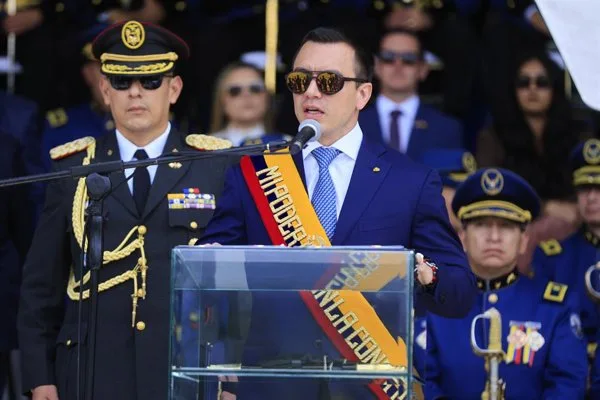
The Armed Forces of Ecuador have intensified their presence in the country's nine provinces and four cantons, including the capital, Quito. This deployment occurs within the framework of the curfew that will go into effect at 11:00 p.m. this Sunday, as part of the measures implemented by President Daniel Noboa to confront the growing insecurity and violence generated by criminal groups.
The commander of the Air and Space Operations Command, Mauro Bedoya, confirmed that the security device has been reinforced at the national level. “The entire device has been reinforced at the national level, especially in the nine provinces and four cantons where the curfew begins,” he told the media.
The curfew will extend from 11:00 p.m. to 5:00 a.m., covering the period from May 3 to 18. The affected provinces are Pichincha, Guayas, Manabí, Santa Elena, Los Ríos, El Oro, Esmeraldas, Santo Domingo de los Tsáchilas and Sucumbíos. In addition, the cantons of La Maná, Las Naves, Echeandía and La Troncal are included.
This temporary mobility restriction has regulated exceptions for health care, emergencies, supply, strategic services and essential work activities. The objective is to “reduce the exposure of the population during times of greatest crime incidence, mitigate the risk of collateral damage in highly dangerous operational scenarios, optimize the territorial control of the State and strengthen the effectiveness of joint operations of the Security Block in the containment and dismantling of criminal structures,” as detailed in the executive decree that establishes the measure.
Since 2024, Ecuador has been under a state of 'internal armed conflict', a declaration that seeks to stop the advance of organized crime, by classifying these organizations as terrorist groups. However, the country closed the year 2025 with a record of homicides, reaching approximately 9,300 violent deaths, according to official figures.
Security measures and social context
The security situation in Ecuador has generated a climate of concern among the population. The streets of cities such as Quito and Guayaquil have been the scene of confrontations between criminal gangs, which has led citizens to demand stronger actions from the government. The perception of insecurity has grown, and many citizens feel vulnerable to the possibility of being victims of violence.
The curfew is presented as a response to this crisis. Authorities are seeking to limit nighttime mobility, a time that has been identified as critical for criminal activity. The implementation of this measure has generated a stir among the population, with divided opinions about its effectiveness. Some consider it a necessary step to regain control of the streets, while others fear it will not be enough to address the roots of the problem.
Noboa's government has faced criticism for its security management, but has also received support for its attempts to take drastic measures. The situation in the country is complex, with a background of social inequality and lack of opportunities that fuel the cycle of violence. The authorities have indicated that the fight against organized crime not only requires police actions, but also social policies that address the structural causes of crime.
In this context, the curfew becomes another tool in the fight against crime. The Armed Forces and the National Police have been called to work together to guarantee the safety of the population. Coordination between these institutions is essential for the success of control and prevention operations.
The implementation of the curfew has also generated a debate about citizen rights and individual freedoms. Some sectors have expressed concern about the impact that these measures may have on people's daily lives, especially in a country where the informal economy is a source of income for many families.
As the start date of the curfew approaches, expectations grow among citizens. The hope that this measure will contribute to improving safety is mixed with uncertainty about its long-term effectiveness. The authorities have reiterated their commitment to working to return tranquility to the streets, but the road ahead is uncertain.
The situation in Ecuador remains tense, and security measures have become a constant on the political agenda. The fight against organized crime and violence is a challenge that requires a comprehensive approach, combining police action with effective social policies. In the midst of this panorama, the population expects concrete answers that allow them to live without fear.
The curfew will begin at 11:00 p.m. on Sunday.
Subscribe to Uruguay Al Día
Receive the most important news directly in your email. Clear, independent and updated information every day.
Follow us on WhatsApp
Join our official channel and receive alerts, news and exclusive content from Uruguay Al Día.
🔔 Join the WhatsApp channel