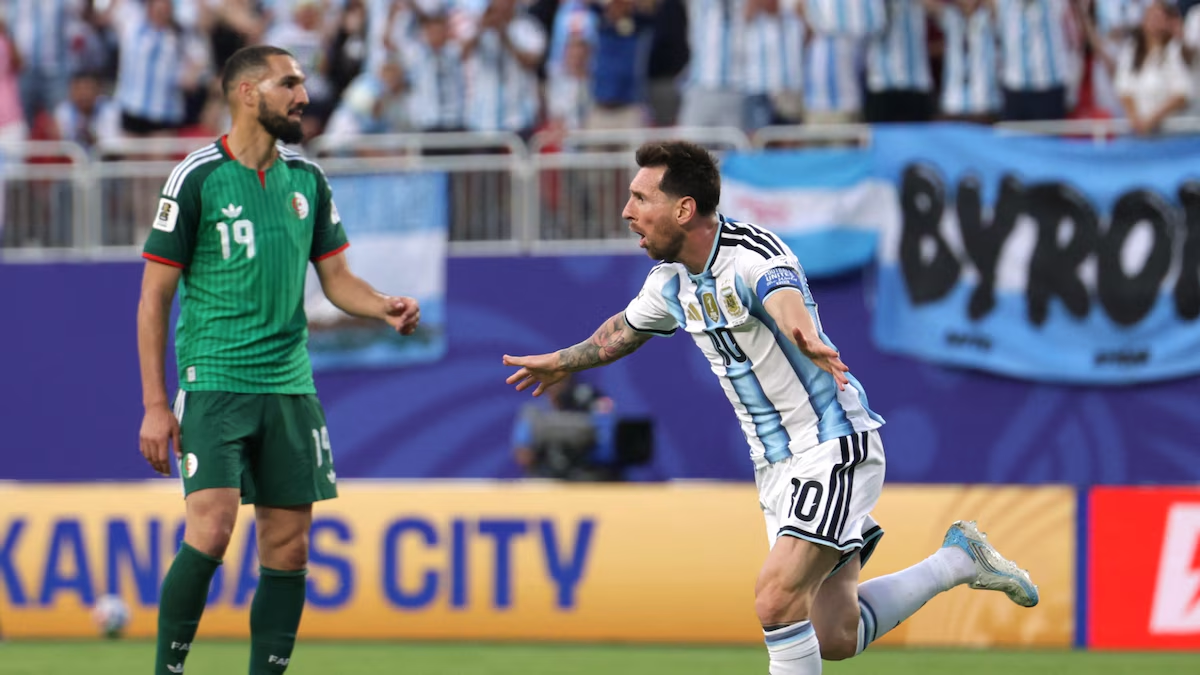


The game was over, victory was assured and Lionel Messi's great goal was already going around the world. However, in the WhatsApp groups, on the coffee tables and in every digital corner where football is breathed, the topic was different. There was no talk about the precision of the left-footed shot or the Argentine defensive solvency. The conversation revolved around a single action, an instant that was frozen in a thousand repetitions and that, for a significant part of the audience, should have ended differently.
While some celebrated Messi's mischief and constant influence, others, with the remote control in hand and social networks open, pointed vehemently at the screen. “Isn't that red?” was read over and over again on Twitter. The controversy, that inevitable condiment of the World Cups, has just landed in Kansas City and it seems that it will not move from there for a long time.
The VAR, that silent witness that generates more doubts
The great frustration in the atmosphere is not only due to the play itself, but also due to the eternal lack of uniformity. When the judge decided to continue the match without intervening drastically, the feeling in the stands and on the couch at home was one of inequality. Critics maintain that, if the protagonist had been an unknown midfielder from a team without the historical weight of Argentina, the expulsion would have been automatic.
It's the same old debate, but this time with the VAR's magnifying glass on each pixel. Technology, which promised absolute justice, ends up, ironically, at the center of new theories about favoritism. On the street, people discuss whether the weight of the Stars' jersey has invisible armor that the referee feels—or fears—touching when the clock ticks down key moments.
A debate with no announced end
Until now, FIFA maintains its usual secrecy. There is no statement, no apology, or clarification as to whether the criteria applied was correct. That institutional silence, far from calming the waters, works as fuel for the fire. For Messi's defenders, it was just a brush, part of the temperament of a footballer who plays to the limit but without malice. For detractors, it was definitive proof that the “10” has an advantage.
The truth is that this controversy only revives an open wound in modern football: the system's inability to unify criteria. When we see a foul, we all expect a logical resolution, but we are faced with an interpretation that seems to vary depending on who is the one who receives the blow and who is the one who delivers it. That ambiguity is, today, the great enemy of the show.
The stain on a dream debut
Argentina's victory in its debut is, sportingly speaking, irreproachable. But the postgame is colored by this shadow. Each evening sports program has become a value judgment on Messi's behavior and the passivity of the referee team. It is inevitable to wonder if, as the tournament progresses, this precedent will reappear.
For now, we are left with the debate. On fan forums, images circulate at breakneck speed, with red circles marking impacts and digital lines drawn to justify one position or another. Argentina continues forward, with the objective intact and the captain as its standard, but with a question installed: will this be the tone that will set the refereeing of the entire World Cup? The answer, like almost everything in this sport, will depend on which side of the stands you look at.
Subscribe to Uruguay Al Día
Receive the most important news directly in your email. Clear, independent and updated information every day.
Follow us on WhatsApp
Join our official channel and receive alerts, news and exclusive content from Uruguay Al Día.
🔔 Unirme al canal de WhatsApp