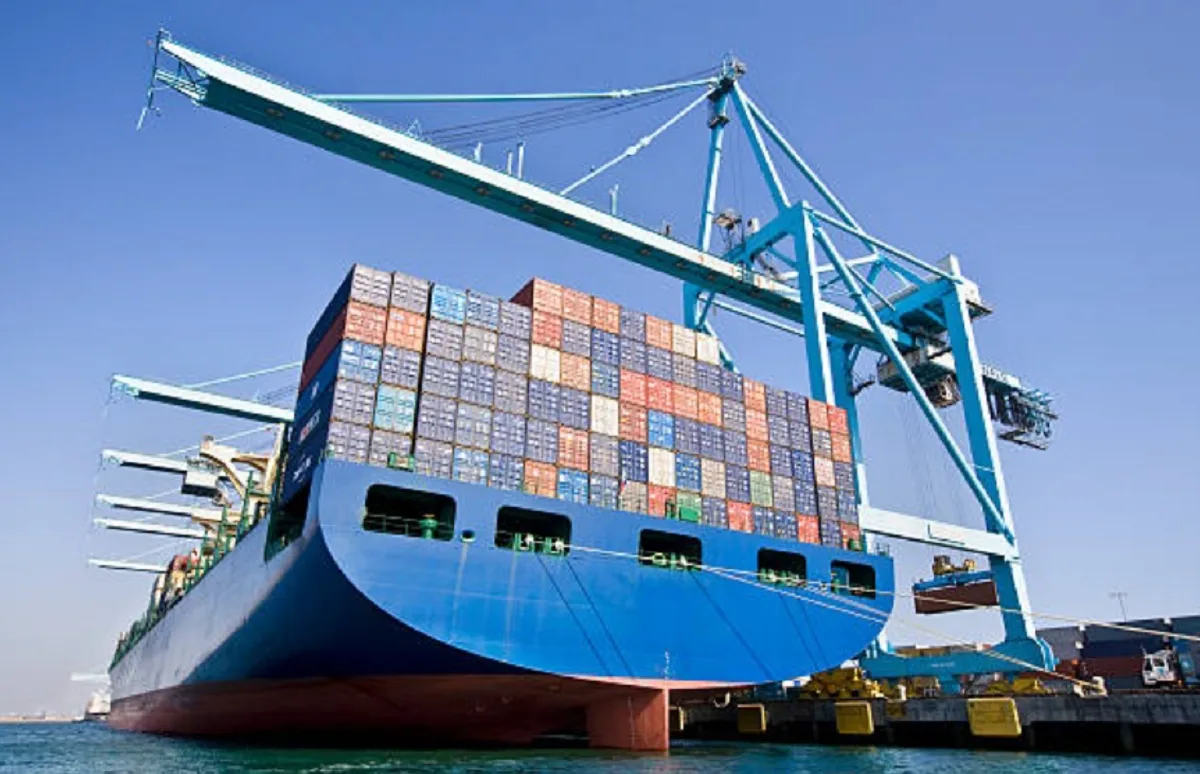

Merchant ship in port loading Uruguayan hake for export to Europe.
The recent free trade agreement between Mercosur and the European Union has begun to show its first positive repercussions for South American countries. Uruguay and Argentina have been the first two countries in the bloc to export with zero tariffs to the old continent, standing out as pioneers in taking advantage of the benefits of this historic agreement.

Uruguay inaugurates hake exports to Lithuania
On Monday, May 4, 2026, Uruguay took the first step by sending 28 tons of hake to Lithuania, marking a significant milestone for the national fishing sector. The company responsible for this shipment was Ciupsa, which used the Xiamen Express ship of the Hapag-Lloyd shipping company for transportation. Before the entry into force of the agreement, this product faced a tariff of 15%, a barrier that has now been completely removed.
The Chamber of Fisheries Industries of Uruguay (CIPU) highlighted the importance of this achievement, emphasizing that it is not just a successful business operation, but rather a symbol of the new competitiveness that the agreement has brought to the sector. As it is already processed hake (without head, viscera or tail), the added value is greater, generating more employment local and use of national raw materials.
The European market, being the largest importer of fish in the world, represents a destination of high value and demand. With the new zero tariff, Uruguay has the opportunity to compete on equal terms, opening doors to future structural changes that the CIPU has been promoting before the State for some time.
Argentina follows the path with export of dark honey
A day later, on Tuesday, May 5, Argentina also made use of the agreement, exporting 22 tons of Honey dark The Apícola Danangi company, located in Concordia, Entre Ríos, was in charge of this shipment. Until the beginning of the agreement, the tariff for honey was 17.3%, reflecting the significant impact of the elimination of these customs fees.
With 35 years of experience, Apícola Danangi has grown exponentially since its beginnings in 1991 with 400 hives to reach the current 14,000 hives. In addition, the company has diversified its activities, incorporating a forestry division in 1997 with eucalyptus plantations that cover 1,600 hectares, thus supplying its sawmill and beekeeping materials factory. On average, the company exports 3,200 tons of honey annually, at a price of around $2,700 per ton.
Brazil and Paraguay, for their part, have not yet completed exports under this new framework, which places Uruguay and Argentina as the initial leaders in implementing the benefits of the agreement.
Impact and prospects of the agreement
He free trade agreement between Mercosur and the European Union represents an unprecedented opportunity for South American countries to access one of the largest and most demanding markets in the world without the tariff restrictions that previously limited their competitiveness.
For Uruguay, in particular, the elimination of tariff The 15% tax on its fishing exports opens new possibilities to expand its presence in the European market, while for Argentina, the elimination of the 17.3% tax on honey could mean a significant increase in its international sales.
Both countries have demonstrated their ability to quickly adapt to new commercial conditions, positioning themselves as examples to follow within Mercosur. As Brazil and Paraguay prepare to enter this new commercial scenario, the exports from Uruguay and Argentina could serve as models of success for their neighbors.
Subscribe to Uruguay Al Día
Receive the most important news directly in your email. Clear, independent and updated information every day.
Follow us on WhatsApp
Join our official channel and receive alerts, news and exclusive content from Uruguay Al Día.
🔔 Join the WhatsApp channel