The rumble in the international internal affairs: a truce that may be a mirage
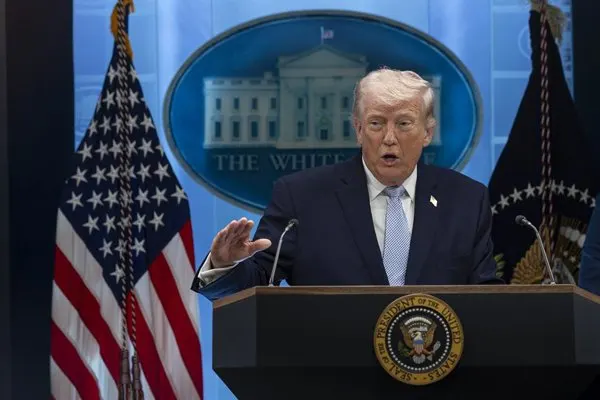
The news that shook the offices and streets of half the world was not minor. In a scenario where tensions between the United States and Iran seem to have no end, President Donald Trump's decision to suspend military attacks against Tehran for a period of two weeks generated a stir that has not yet dissipated. The move, which on the surface seems like a pause in the middle of a war escalation, in practice leaves more questions than certainties. The internal conflict in Washington, the international pressures and the murmuring of ordinary people in the streets mark the pulse of a conflict that, as always, seems to be just one click away from breaking out again.
The political context in the United States, with a Trump who usually leaves nothing to chance, is part of a strategy that many analysts describe as a high-risk move. The decision to extend the ultimatum to Tehran, just a few hours before its expiration, reveals internal tension in the White House. On the one hand, the pressure from the toughest sectors of the military and security establishment, who do not want to give one bit in their position towards Iran. On the other, the voices that call for a diplomatic solution, even if it is momentary, to avoid a total war that could have unpredictable consequences for the region and the global economy.
Meanwhile, in Tehran, the reaction was swift. The Islamic Republic, which has maintained a stance of resistance and rejection of external pressures, watched cautiously. The total, immediate and safe opening of the Strait of Hormuz, which the United States demands as a condition for lifting the attacks, became the axis of the negotiation. Recent history shows that Iran does not usually give in to its claims, much less in the face of military threats. The tension in the area, which is already a powder keg, is now se ve envuelta en una especie de pausa que puede ser solo un respiro antes de la tormenta.
Pero, ¿qué hay detrás de esta decisión? La respuesta, en el runrún de la international politics, points to a combination of factors. The conversation between Trump and Pakistani Prime Minister Shehbaz Sharif was key. The request to extend the ultimatum for two weeks, according to unofficial sources, reflects an attempt by Washington to buy time. Time that, in practice, can be used to negotiate, to apply pressure or, simply, to prepare the ground for a future escalation. Diplomacy in these cases is usually a chess game where each move can be decisive.
In the streets and squares, those on foot remain attentive to every turn of the conflict. The daily news in the cities of Uruguay and the world shows that, although the news seems distant, the fear of a war in the Middle East is still present. Uncertainty, the fear of a conflict that can overwhelm any control, and the hope that diplomacy will prevail, coexist in a scenario where nothing is written. Recent history teaches that temporary truces in these conflicts are often just that: pauses in a war that can resume at any moment.
The weight of decisions in international politics
Trump's decision, which is actually a high-voltage movement in American foreign policy, has a weight that transcends the borders of the United States. The internal situation in Washington, marked by the elections and pressure from the military sectors, is reflected in every statement and every movement on the international board. The White House, which in recent years has proven to be a scene of unpredictable decisions, is now trying to show an image of control and a heavy hand, although deep down many analysts warn that it is a strategy of attrition.
The impact on the region, on countries like Saudi Arabia, Israel and the Gulf countries themselves, is direct. The tension in the Strait of Hormuz, one of the most strategic routes for world oil, can unleash a global economic crisis if the situation boils over. Uncertainty in the markets, crude oil prices and political stability in the area largely depend on how this temporary truce evolves. Diplomacy, in these cases, becomes a high-tension game where every word, every gesture, can be interpreted as a sign that war is around the corner.
Inside Iran, the official position remains firm. The Islamic Republic does not give in to threats and continues to demand its right to navigate the Strait of Hormuz without external pressure. The country's history of resistance, which has faced international sanctions and pressure for decades, means that any concessions will be viewed with suspicion. The possibility of a total and safe opening of the strait, as Washington demands, is presented as a turning point that could define the course of the crisis in the coming days.
The street and the uncertain future of the conflict
In the streets of Montevideo, Buenos Aires, Santiago and other cities in the region, the buzz about the possible war in the Middle East mixes with everyday reality. Ordinary people, most of whom do not understand military strategies or international diplomacy, feel the weight of uncertainty. The daily markets, the news on the radio and social networks reflect a latent fear: will this pause be just a respite before everything explodes again?
History shows that in these conflicts, temporary truces are often just that. A parenthesis in a war that can resume at any moment. The tension in the Strait of Hormuz, which concentrates 20% of the world's oil, is a risk factor that keeps markets and governments in suspense. The possibility of a mistake, of a rapidly escalating incident, is always present in the air.
Meanwhile, in Tehran, the official stance remains one of resistance. The demand for the total opening of the Strait of Hormuz, as a condition for lifting the threats, remains on the agenda. The history of Iran, which has learned to play the cards of diplomacy and resistance, indicates that it will not give in easily. The tension, which has been increasing in recent years, now appears to be on some kind of pause, but no one knows how long it will last.
The future of the conflict in the Middle East, that area that has always been a powder keg, remains unknown. Trump's decision, which in practice may only be a respite, leaves in the air the question of what will happen in the coming hours and days. History, the one that always ends up being written in facts, seems to indicate that calm in these cases is just a passing illusion.
Leave your comment
To comment you must be registered and logged in.
Comments (0)
There are no comments yet.