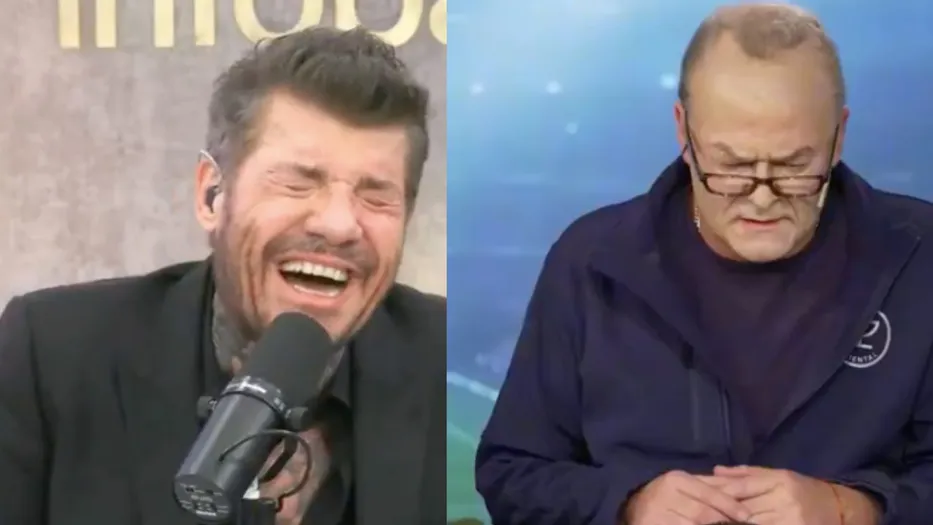

There are those who still believe that the almanac stopped in the 90s. Marcelo Tinelli is, without a doubt, the greatest exponent of that misunderstood nostalgia. This time, the scenario was the streaming of Infobae World and the excuse, the debut of the Uruguayan team. But what was intended to be a “hilarious moment” ended up becoming a postcard of the creative decline of a driver who seems not to find his place in the digital age.
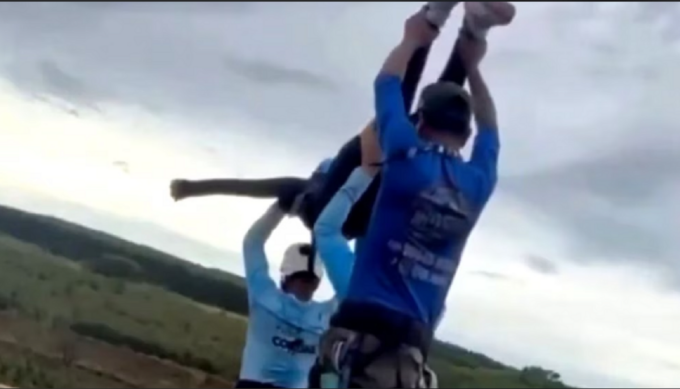
The proposal was simple: revive the spirit of videomatch with the imitation of Marcelo Bielsa by Roberto Peña. However, what was seen on screen was an exercise in rusty humor. While Peña tried to replicate the Argentine coach's gestures and pauses, the studio was filled with laughter that sounded overly rehearsed, almost as if the driver himself needed to convince himself that the joke still worked.
A script that does not make water, sinks
The parody, centered on Uruguay's 1-1 draw against Saudi Arabia, foundered from the first minute. Phrases like “the team was more united in the cooling break” or the reference to wearing “one of each sock” tried to capture a supposed eccentricity of the Rosario coach, but ended up being commonplace. It's the old tactic sketch cheap: grab a character's tic and repeat it ad nauseam, hoping that the audience explodes out of inertia.
The saddest thing about the segment was Tinelli's own intervention. When the driver delivered his punch line—“He spoke for 14 minutes and said nothing”—he did nothing more than confirm his own lack of content. That search for the phrase “viral” sounds like desperation today. It is the reflection of a communicator who, in the absence of fresh ideas, takes refuge in easy mockery of figures who, with their virtues and defects, demonstrate much more depth than himself. show television.
HAHAHA Bielsa's imitation in Tinelli's program pic.twitter.com/GddzgcVKvI
— Scaloneta Mode 🇦🇷🏆 (@ModoScaloneta) June 16, 2026
Nostalgia as a refuge from the lack of ideas
The attempt is understandable: Marcelo Tinelli built an empire based on these types of comedy steps. But the problem is that the context changed. Today, the viewer looks for immediacy and authenticity, not a forced caricature that tries to sell as the “spirit of Videomatch” something that is simply no longer funny. The panelists' laughter, forced and somewhat uncomfortable, showed that the segment was stretched far beyond what was necessary.
It's not just a matter of humor. It is the constant denigration of those who, like Bielsa, maintain a professional seriousness that is incompatible with the media circus that the driver tries to set up. Discrediting the coach with a mediocre imitation is the quickest way to admit that you no longer have the tools to contribute anything substantial to the coverage of the World Cup.
The silence after forced laughter
In the end, when the sketch ended, what was left was a digital silence. Social networks, so quick to meme and criticism, did not show the impact that Tinelli surely expected. The “viral” they were looking for was forgotten for a stream which, like its host, seems to be unable to find the tone for an audience that has already turned its back on these television formats of the past.
Tinelli continues to insist on the recipe that took him to the top three decades ago, without realizing that the ingredients are already expired. Imitating Bielsa does not restore him to his place as “the great driver”, it only exposes a formula that cries out for a definitive retirement. Because, at the end of the day, the one who spoke for 14 minutes and said nothing was not the impersonator, but the program itself.
Subscribe to Uruguay Al Día
Receive the most important news directly in your email. Clear, independent and updated information every day.
Follow us on WhatsApp
Join our official channel and receive alerts, news and exclusive content from Uruguay Al Día.
🔔 Join the WhatsApp channel