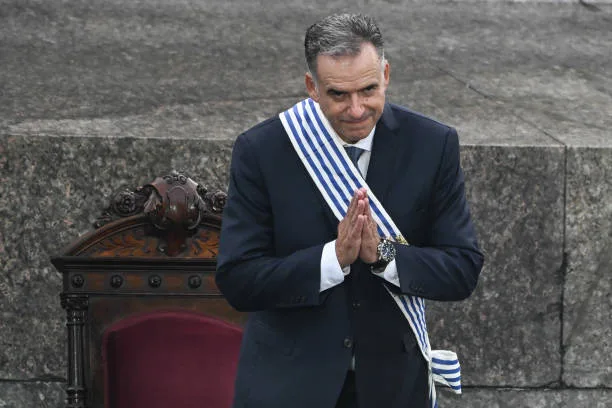
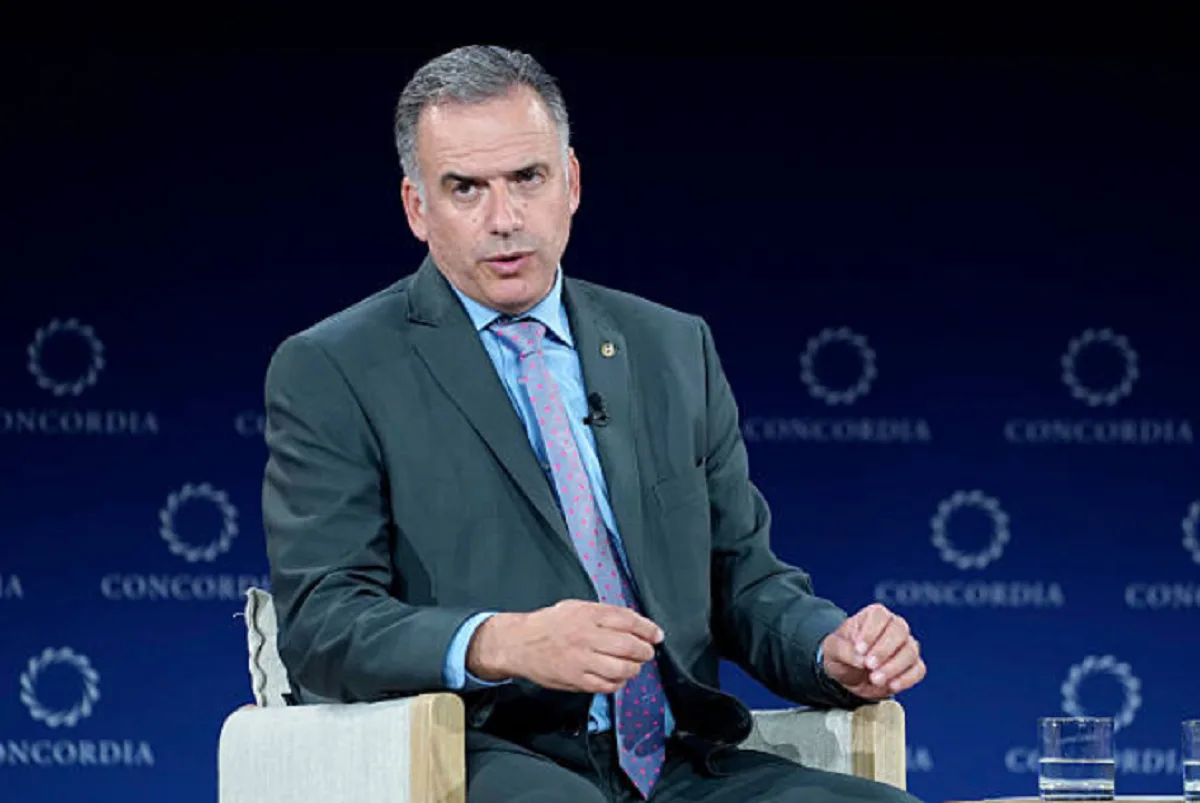

Orsi's position on Venezuela: The Uruguayan president was blunt in pointing out that the departure of Nicolás Maduro from power, after the recent intervention of the United States, can only be considered positive news as long as it means the end of an authoritarian model. For Yamandu Orsi, the current scenario is extremely fragile and warned that, if it is not channeled towards a democratic transition with free elections, the risk is that the current system will simply change "color" but maintain its original vices. This strategic vision seeks to detach ourselves from immediate euphoria to focus on long-term institutional stability.
In a press conference that generated wide repercussions, the Orsi on Venezuela focused on the defense of diplomatic prudence. The president questioned those who demand constant and loud condemnations of him, arguing that the task of a head of state is not to walk around the world "pointing the finger" at regimes that he does not like. Orsi recalled that his position on the authoritarian nature of the Maduro government has already been expressed on repeated occasions and that going out to repeat it after the accomplished facts would be, in his own words, an act of political "cowardice."

The rejection of force and Orsi's position on Venezuela
The cornerstone of the Orsi's position on Venezuela It is the principle of non-intervention in the internal affairs of other states. The president convened his cabinet at the residence of Suárez y Reyes to ratify that Uruguay remains faithful to a historical doctrine that dates back to 1965. At that time, our country had already rejected the US invasion of Dominican Republic within the UN Security Council. For the current administration, the end cannot justify the means, and the unilateral use of force constitutes a dangerous precedent for the peace and security of the entire region.

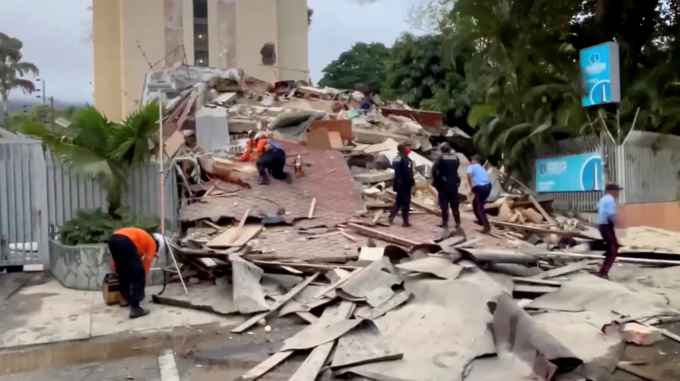
From the Executive Branch, Orsi on Venezuela It materialized in an official statement where deep concern was expressed about the military actions carried out in Venezuelan territory. According to the document, these maneuvers contravene the Charter of the United Nations and put the civilian population at risk. He Uruguayan government insists that the only valid solution is a peaceful one, urging that international organizations, which Orsi described as "pulverized", recover an active role to guarantee that the popular will is respected at the polls.
Internal criticism and the firmness of Orsi's stance on Venezuela
The president did not dodge the questions from the opposition, which described the Foreign Ministry's initial response as lukewarm. However, Orsi and the Venezuelan dilemma remains firm in political realism: "Knowing how to use foreign relations prudently" is, for the president, the key to protecting national interests and the country's historical coherence. Orsi emphasized that speaking fifteen times about the same topic does not change reality if one does not act under the protection of the international law, avoiding falling into the microphone diplomacy that usually prevails in moments of crisis.
Through his social networks, Orsi reinforced that the government is closely following every event after the capture of Maduro and his move to New York. The Orsi's position on Venezuela It implies constant vigilance of regional security, understanding that any destabilization in the Caribbean has a domino effect on the rest of the continent. The permanent search for a negotiated solution continues to be the priority, even when the panorama seems to indicate that forceful solutions have taken the lead on the global agenda.
Towards a constitutional democracy according to Orsi's position on Venezuela
For the fall of the regime to be truly celebrated in the Executive Tower, the Orsi's position on Venezuela demands the formation of democratically constituted governments. It is not simply about the removal of a leader, but about the restoration of a social and political fabric that allows the free expression of Venezuelan citizens. The Uruguayan president stressed that authoritarianism must cease to exist to give way to real democracy, a step that Uruguay is willing to accompany as long as the legal and sovereign channels of the Venezuelan people are respected.
Finally, the Orsi's position on Venezuela makes it clear that Uruguay will not be an actor that validates military interventions outside the framework of international legality. In an increasingly polarized world, the commitment to common sense and adherence to the fundamental principles of the UN seems to be the path chosen by the current Uruguayan government. The development of the next few days will be crucial in determining whether the change of command in Caracas is the beginning of a new democratic era or if we face a new period of instability under a different guise.
Will the international community be able to rebuild the "pulverized" organizations to which Orsi alludes to guarantee a genuine transition in Venezuela without new forceful interventions?
Subscribe to Uruguay Al Día
Receive the most important news directly in your email. Clear, independent and updated information every day.
Follow us on WhatsApp
Join our official channel and receive alerts, news and exclusive content from Uruguay Al Día.
🔔 Join the WhatsApp channel