The internal in the region: between diplomacy and latent tension
The political scenario in the Middle East and the Strait of Hormuz once again highlights the fragility of a peace that, in reality, seems to be just one step away from the abyss. The recent declaration of a two-week ceasefire between the United States and Iran, which generated a stir in European capitals and on the streets of neighboring countries, is nothing more than a parenthesis in a crisis that has been escalating for decades. Diplomacy, in its crudest form, appears to be the only possible way, although ordinary people know that the conflicts in the region have deep roots, which cannot be resolved with temporary agreements.
From the White House, Donald Trump announced the suspension of attacks against Iran for a period of two weeks, a measure that, on the surface, seems like progress. But internally, analysts and political actors know that this is nothing more than a respite, a moment to reevaluate forces and prepare the next move. The tension in the Strait of Hormuz, a strategic passage for the world's oil and gas, continues to be a turning point. The uncertainty about whether this truce will last or just another mirage in the long history of confrontations in the area keeps ordinary people and experts in international politics in suspense.
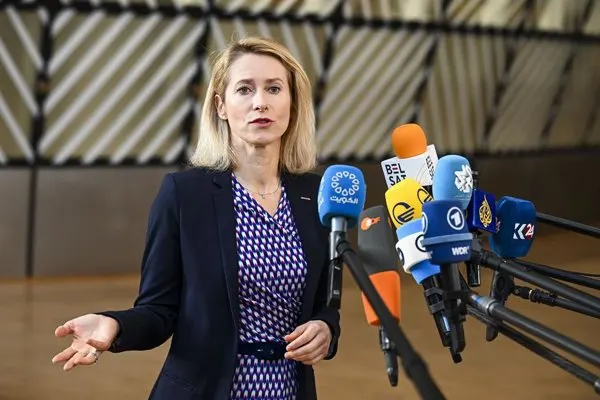
The buzz in European capitals, particularly in Brussels, is that the European Union seeks to maintain an active role, but with caution. EU High Representative for Foreign Policy Kaja Kallas called the agreement “a step back from the edge of the cliff” but also a “much-needed” opportunity for diplomacy. Diplomacy, that old ally that always appears in the corridors of international politics as the last hope, now faces the reality that the root causes of the conflict remain unresolved. The door to mediation, in the words of Kallas, must remain open, but the murmur in the corridors of the European Commission indicates that patience has a limit.
For her part, the president of the European Commission, Ursula von der Leyen, was not far behind in public statements. He welcomed the "desired de-escalation" and thanked Pakistan for its mediation, in a gesture that reflects the importance of regional actors in a scenario where the great powers seem to play endless chess. The EU, in su papel de mediador, busca coordinar esfuerzos con sus socios en la región, pero la interna también revela que la confianza en que esto sea solo un paréntesis es limitada. La diplomacia, en estos casos, es una carrera contra el reloj y la desconfianza.
El runrún en los pasillos del poder indica que, si bien la tregua de dos semanas puede parecer un logro, en realidad es solo una pausa en una guerra de desgaste que lleva años. La tensión en el estrecho de Ormuz, que en la interna de los países de la region and in Western capitals it is analyzed with a magnifying glass, it continues to be a risk factor. The uncertainty about whether this pause will be enough to avoid a further escalation keeps ordinary people in suspense, who watch with concern how conflicts repeat themselves in an endless cycle.
The role of Pakistan and mediation in the internal regional
Pakistan, that country that always appears as a key actor in regional internal affairs, has taken a step that many in the diplomatic corridors consider crucial. Foreign Minister Ishaq Dar was the one who facilitated the mediation that led to the signing of the ceasefire between Washington and Iran. The news, which generated some relief in the corridors of international politics, also reveals the importance of regional actors in a scenario where the great powers seem to play a chess game with pieces that are not always in sight.
Pakistan's Prime Minister Shehbaz Sharif said the agreement includes "its allies" and represents an "immediate ceasefire throughout the territory," including Lebanon and elsewhere. However, within the region, the voices of ordinary people and political analysts know that this is nothing more than a first step, and that the deep causes of the conflict remain unresolved. Pakistani mediation, in that sense, is seen as a valuable effort, but insufficient to change the underlying dynamics.
The buzz in the streets and on social media indicates that the population in the region, tired of years of conflict, views these movements with skepticism. Recent history shows that temporary agreements, without a definitive political solution, only serve to buy time. Pakistan's mediation, in this context, is valued, but also questioned for its ability to influence substantive decisions. The internal situation in the region, marked by geopolitical and economic interests, continues to be a labyrinth with no clear exit.
In the diplomatic corridors, it is said that the door to mediation must remain open, but that the real key is to resolve the root causes of the conflict. The tension in the Strait of Hormuz, in particular, remains a turning point, and the international community is watching carefully whether this truce will be just a parenthesis or the beginning of a lasting solution. The internal regional situation, with its alliances and disagreements, continues to be a scene of high volatility.
The reactions in Brussels and the weight of European diplomacy
In Brussels, the reaction to the news of the ceasefire was immediate. The EU High Representative for Foreign Policy, Kaja Kallas, and the President of the Commission, Ursula von der Leyen, expressed their support for the measure, although with nuances. European diplomacy, which in recent years has tried to maintain a mediator profile in the Middle East, knows that each false step can be costly.
Kallas called the agreement "a step back from the edge of the cliff" but also a "much-needed" opportunity for diplomacy. The internal situation in the EU reveals that, although there is consensus that diplomatic means are the only viable one, there is distrust that this is only a lasting respite. The EU, in its role as mediator, seeks to coordinate efforts with its partners in the region, but it is said in the corridors that there is a limit to patience.
Von der Leyen, for her part, welcomed the "desired de-escalation" and thanked Pakistan for its mediation. In his statements, he made it clear that the priority remains that negotiations for a durable solution continue. The insider in Brussels indicates that, although the gestures are important, the real test will be whether these temporary agreements manage to lay the foundations for a stable peace.
The weight of European diplomacy within the region is measured in gestures and the ability to keep the doors of dialogue open. The EU, which in the corridors of international politics seeks to consolidate its role as mediator, knows that at this time every move counts. The tension in the Middle East, with its history of conflicts and betrayals, continues to be a scenario where diplomacy is played in every word and in every provisional agreement.
The noise in the streets and the gaze of the ordinary people
On the streets of the countries in the region and in European cities where the crisis is closely followed, the noise is clear: people are tired. The hope that these temporary agreements can translate into lasting peace is diluted with each news of clashes or threats. Distrust in political actors, both in Washington and Tehran, is palpable.
Ordinary people, who are actually the ones who suffer the most from the consequences of these conflicts, view the two-week truce with skepticism. Recent history shows that, in the Middle East, agreements signed at the negotiating tables often fail to translate into changes on the ground. The tension in the Strait of Hormuz, which is perceived internally and on the streets as a latent risk, continues to be a topic of constant concern.
The buzz on social media and in everyday conversations reflects the feeling that everything can explode again at any moment. The population, which in ordinary areas is usually the most affected by conflicts, views politicians' statements and diplomatic gestures with skepticism. The history of the Middle East, with its cycles of war and peace, seems to repeat itself over and over again, leaving ordinary people in uncertainty.
Meanwhile, in the corridors of power, analysts and diplomats know that the real test will be whether this two-week truce manages to open a path to a definitive solution. The internal conflict in the region, marked by geopolitical interests, changing alliances and betrayals, continues to be a scenario
Leave your comment
To comment you must be registered and logged in.
Comments (0)
There are no comments yet.