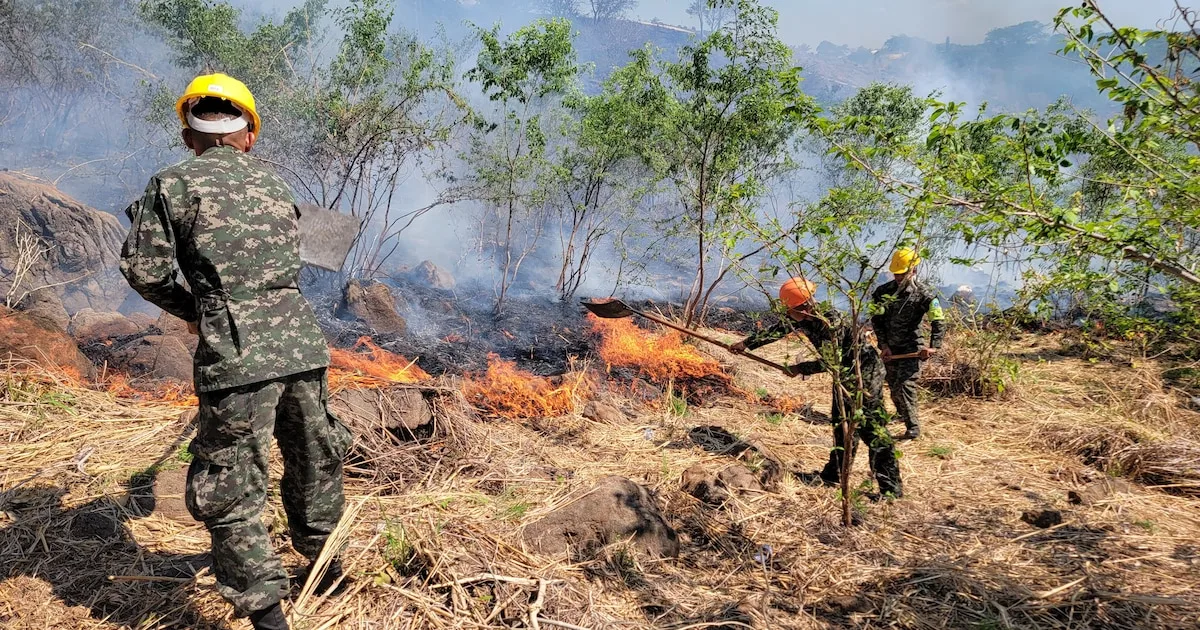

In the western region of Honduras, a vast inter-institutional operation has been deployed to confront a large-scale forest fire that is affecting the Celaque National Park, one of the country's most precious natural jewels. This park, located in the department of Lempira, is considered crucial not only for its biodiversity, but also for being a vital source of water for the surrounding communities.
Coordination and joint efforts
The director of the Forest Conservation Institute (ICF), José Armando Ramírez, has reported that nearly 800 people are involved in the firefighting tasks, which have already lasted for four consecutive days. The fire, which originated in the San Manuel sector, has advanced to difficult-to-access areas of the park, complicating control efforts.

The ICF brigades, together with three battalions of the Honduran Army and volunteers from nearby communities, are distributed on different fronts, fighting the flames in adverse weather conditions. The authorities fear that the impact of these fires will be greater than estimated, as they estimate that the affected areas in the country could reach 27,000 hectares, due to the reactivation of outbreaks in various parts of the territory.
Response camps and operating costs
Given the complexity of the terrain and the magnitude of the fires, temporary camps have been established for the brigades, allowing them to begin their work first thing in the morning. According to the ICF, the operational cost to deal with the fire in Celaque has already exceeded 1.2 million lempiras in just four days, covering salaries and intensive work days.
The authorities have highlighted that at certain times of the operation the participation of up to a thousand people per day has been required, which underlines the magnitude of the response necessary to contain the fire.
Environmental impact and military participation
The environmental consequences of the fire in the Celaque National Park are significant. The loss of biodiversity, soil degradation and the impact on water sources are some of the most serious concerns, given that these sources are essential for the water supply of communities in the region.
In addition to the operations in Celaque, the Honduran Armed Forces have been active in combating at least 15 more fires during the past weekend, affecting departments such as Francisco Morazán, Santa Bárbara, El Paraíso, Olancho and Cortés. To date, in 2024, they have intervened in the control of 304 fires, with more than 3,600 hectares affected, mobilizing more than 4,800 military personnel.
Future research and challenges
The ICF has initiated investigations to determine the causes of the fire in San Manuel, Lempira, seeking to identify if there was human intervention. However, the lack of citizen complaints continues to be an obstacle to the prosecution of these environmental crimes, which complicates the future prevention of such incidents.
Emergency crews continue to work hard in Celaque National Park, hoping to control the fire and minimize environmental damage. This operation not only represents an effort to preserve the biodiversity of the region, but also to protect water resources and the quality of life of local communities.
Subscribe to Uruguay Al Día
Receive the most important news directly in your email. Clear, independent and updated information every day.
Follow us on WhatsApp
Join our official channel and receive alerts, news and exclusive content from Uruguay Al Día.
🔔 Join the WhatsApp channel